


All Categories
Purchase
Mobile
Contact Us
Top
Chinese
All Categories
Products
Suppliers
Purchase Request
Exhibitions/Events
News
Videos
Buyer
Supplier
Home News & Wiki Wiki List
Wiki Details
Share to

Curcumin

姜黄素

English Alias:

Chinese Alias:

Category:

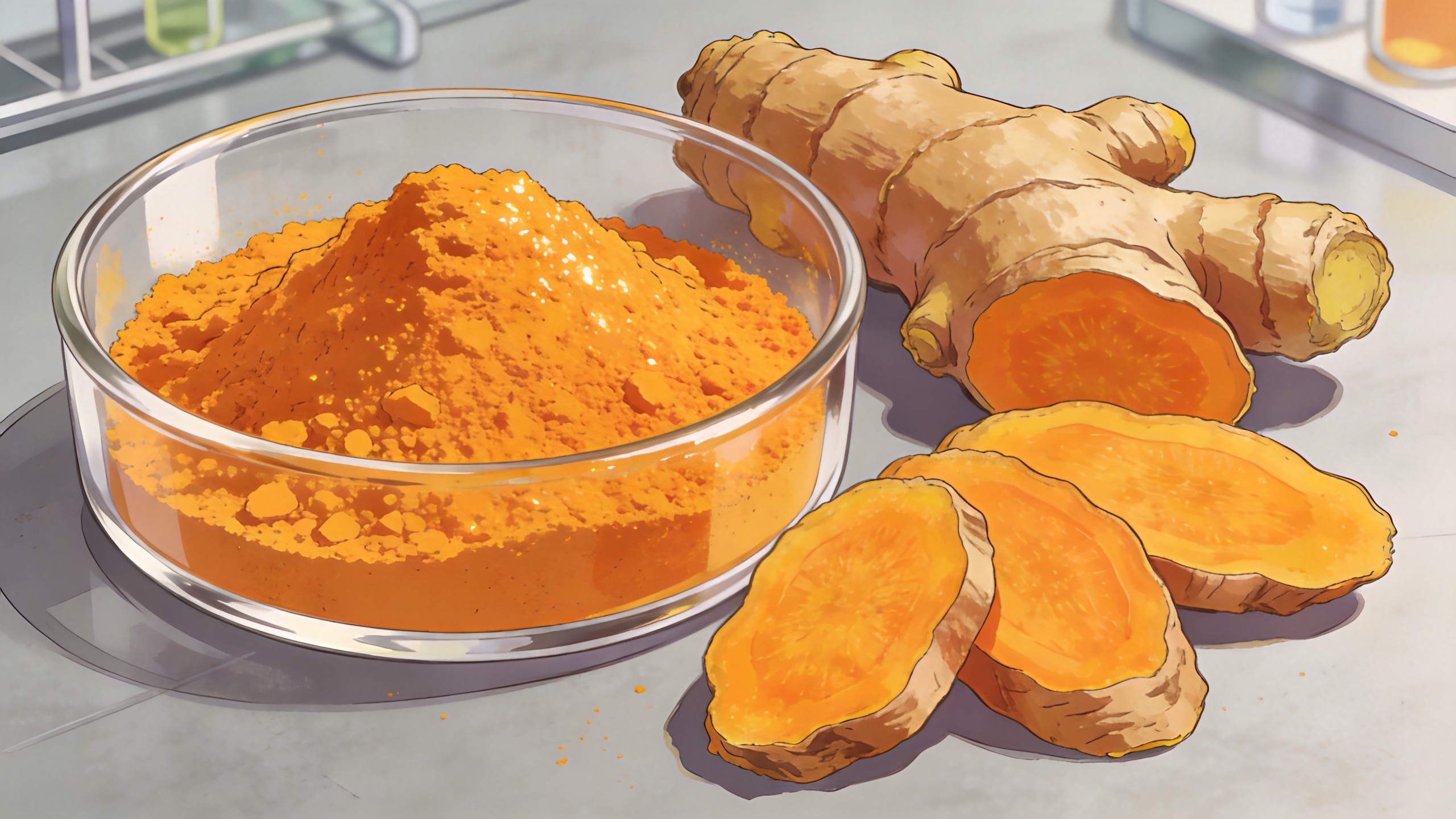
Curcumin (Curcumin,CAS No. 458-37-7) is a natural polyphenolic compound extracted from the rhizome of the Zingiberaceae plant Curcuma longa (Curcuma longa L.), with a chemical formula of C21H20O6 and a molecular weight of 368.39. As an internationally used food colorant (INS No. 100 (I),CNS No. 08.132), curcumin presents orange-yellow crystalline powder and is widely used in food, beverage, medicine, cosmetics and other fields. Curcumin not only has excellent coloring properties, but also has an
姜黄素
姜黄素
Definition
Industry Overview
Technical Standards
Application Areas
Security Control
Development Trends
Policies & Regulations
References
Definition
Curcumin is a naturally occurring organic compound that belongs to the curcuminoid family of polyphenols. Its chemical name is 1,7-bis-(4-hydroxy -3-methoxyphenyl)-hept -1,6-diene -3,5-dione. Its English name is Curcumin and its trade names include curcumin, turmeric, Tumeric Yellow, Diferuloylmethane, etc. Curcumin is the main active ingredient in the rhizome of Curcuma longa (Curcuma longa L.), a zingiberaceae plant used as a spice and traditional medicine for thousands of years from India and Southeast Asia.

From the perspective of chemical structure analysis, curcumin molecules by two aromatic rings connected by a seven carbon chain, each aromatic ring with a methoxy group and a hydroxyl group, this special conjugated double bond structure gives curcumin a bright orange color. From the perspective of phytochemistry, curcumin is not a single compound, but a mixture system containing a variety of curcumin compounds, mainly including three components:

The first is curcumin (Curcumin), chemical formula C21H20O6, molecular weight 368.39,CAS number 458-37-7, which is the most important active ingredient in turmeric extract, usually accounting for more than 70% of the total content of curcumin compounds.

The second is demethoxycurcumin (Demethoxycurcumin), chemical formula C20H18O5, molecular weight 338.39,CAS number 33171-16-3, is a monomethoxy derivative of curcumin, which usually accounts for 15%-25% in turmeric extract.

The third is bisdemethoxycurcumin (Bisdemethoxycurcumin), chemical formula C19H16O4, molecular weight 308.33,CAS number 33171-05-0, is the product of curcumin completely demethoxylated, the content is relatively low, generally between 5%-15%.

These three curcuminoids are similar in chemical properties and biological activities, but there are differences in some physical and chemical parameters, such as solubility and stability. Commercial curcumin products are usually a mixture of these three compounds, and the specific ratio depends on factors such as the source of the raw material, the extraction process and the degree of purification.

The physical and chemical properties of curcumin are closely related to its application performance. In appearance, curcumin appears as an orange-yellow crystalline powder with bright color and good light stability. In terms of solubility, curcumin exhibits typical non-polar compound properties: insoluble in water and ether, but soluble in ethanol, glacial acetic acid, acetone, methanol and other organic solvents. Under acidic to neutral pH conditions, curcumin appears yellow, while under alkaline conditions, it turns to reddish brown, which makes it also have application in food pH indicator. Curcumin has a melting point of about 183°C and is stable at room temperature, but it is sensitive to light, heat and oxygen, and may undergo oxidative degradation during long-term storage.

In particular, it should be pointed out that curcumin, turmeric and turmeric powder are three concepts that are both related and different. Turmeric refers to the dried rhizome of turmeric (Curcuma longa L.) in the ginger family Curcuma longa. It is a traditional spice and medicinal material and is used as a spice in the food industry. Its CNS number is defined as 08.102 and INS number is defined as 100(ii) in GB 2760-2024. Turmeric powder is a powdered product made by grinding turmeric rhizomes after drying, mainly used as spices and condiments. Curcumin refers specifically to curcumin-based colorant products extracted and purified from turmeric rhizome, with a purity of usually above 95%, CNS number 08.132 and INS number 100 (I) in GB 2760-2024. There are significant differences in functional positioning, scope of use and regulatory definitions among the three, which need to be strictly distinguished in practical applications.

As a natural colorant, the coloring mechanism of curcumin is based on the absorption of visible light by the conjugated double bond system in its molecular structure. When curcumin is dissolved in the food system, its molecules can selectively absorb blue and violet light, thus reflecting the orange-yellow spectrum, giving the food the desired color. The coloring effect of curcumin is affected by many factors, including solvent type, pH value, temperature, light conditions and interaction with other food ingredients. In the oil system, the coloring effect of curcumin is particularly excellent, which is the reason for its wide application in oil food.
Industry Overview
As an important part of the natural colorant market, the industrial development of curcumin is closely related to the overall trend of the global food colorant market. From the perspective of market size, according to Grand View Research research data, the global curcumin market size in 2023 is about 0.87 billion US dollars, while the total global food colorant market size is about 1.602 billion US dollars in the same period. Curcumin occupies more than 54% of the food colorant market and is one of the most representative varieties in the field of natural colorants. In terms of compound annual growth rate, there are some differences in the data of different research institutions, which is generally expected to be between 4.7 and 12.3 percent, which reflects the growing demand for natural colorants in the global market.

From the point of view of the distribution of application areas, the downstream application market of curcumin shows a more concentrated structural characteristics. The food and beverage industry is the largest consumption area of curcumin, accounting for 38.5 of the overall market share, including frozen drinks, candy, instant rice noodle products, carbonated drinks and other categories have a large demand for curcumin. Dietary supplements ranked second with a market share of 31.2, mainly due to the widespread use of curcumin as a health food raw material, especially in anti-inflammatory and antioxidant functional foods. The proportion of applications in the pharmaceutical field is 18.6, and curcumin is used as an active ingredient or excipient in traditional medicines and modern preparations in some countries. The cosmetics sector accounts for 9.4 percent, and curcumin is mainly used for coloring cosmetics such as lipstick and eye shadow, as well as some skin care products.

From the perspective of the distribution of global production areas, the curcumin industry has a highly concentrated geographical feature. India is the world's largest turmeric grower and exporter, accounting for about 80% of the world's total output, and occupies an absolute dominant position in the international curcumin market. The cultivation of turmeric in India is mainly concentrated in Tamil Nadu, Andhra Pradesh and Karnataka. The climatic conditions and soil environment in these areas are very suitable for the growth and development of turmeric rhizomes, and the curcumin content is high. Good quality. India's turmeric industry not only has a huge output, but also has accumulated rich experience in variety breeding, planting technology, processing technology and other aspects, forming a complete industrial chain system. China is the world's second largest producer and consumer of turmeric. The planting area and output of turmeric rank among the top in the world. The main producing areas include Sichuan, Yunnan, Guangdong, Guangxi and other places. The domestic turmeric industry has made significant progress in extraction process and product quality control, and the product quality of some enterprises has reached the international advanced level. In addition, Thailand, Vietnam, Indonesia and other Southeast Asian countries are also important turmeric producing areas. The curcumin products produced in these countries are mainly exported to the regional market.

From the perspective of industrial chain structure, curcumin industry presents typical characteristics of vertical integration. The upstream of the industrial chain mainly includes turmeric planting and auxiliary industries such as solvent extractants and separation materials; the middle reaches are processing links such as curcumin extraction, purification and crystallization; and the downstream are applications such as food and beverage, dietary supplements, pharmaceuticals and cosmetics. At present, the global curcumin industry is experiencing a critical period of transformation from extensive development to refinement and specialization. Enterprises with advanced extraction technology, perfect quality management system and strong R & D ability gradually occupy a dominant position in the market competition.

From the perspective of market competition, the global curcumin market presents a pattern of international competition and regional characteristics. In the international market, companies in India, Europe, North America and other regions have obvious advantages in the production of high-end products and international market development. Companies in Europe and North America are usually positioned in the high-end market and specific application areas, focusing on product purity, quality stability and the provision of technical services. In the domestic market, curcumin production enterprises have formed a certain scale in quantity, and the product quality is uneven. Some enterprises have continuously enhanced their market competitiveness through technological upgrading and quality management. It should be noted that the market analysis content involved in this entry is only described based on the general characteristics of industry development and is not evaluated or compared for any specific enterprise.

From the perspective of consumer trends, the development of the global curcumin market is driven by multiple factors. First, the increasing consumer preference for natural, organic, and non-synthetic food additives is driving the overall growth of the natural colorants market. Secondly, the restrictions on synthetic colorants in national food regulations are becoming more and more stringent, and some synthetic colorants are gradually banned or restricted due to safety and labeling issues, creating an alternative space for natural colorants. Third, in addition to the coloring function of curcumin, its potential antioxidant, anti-inflammatory and other health effects have also attracted the attention of consumers, increasing its application value in the field of dietary supplements. These factors together drive the continuous growth of the market demand for curcumin.
Technical Standards
As a food additive, the formulation and improvement of curcumin's technical standards are of great significance for ensuring product quality, standardizing market order and maintaining consumer health. At present, a relatively complete technical standard system for curcumin has been formed worldwide, covering product specifications, quality indicators, detection methods and other aspects.

In terms of China's standard system, the National Health Commission and the State Administration of Market Supervision have formulated clear technical standards for curcumin. GB 1886.76-2015 "National Food Safety Standard Curcumin Food Additives" is the national standard for curcumin product quality specifications. It provides detailed regulations on curcumin's sensory requirements, physical and chemical indicators, and impurity limits. The standard clearly stipulates that curcumin products should be orange to golden yellow powder without foreign impurities visible to normal vision. In terms of physical and chemical indexes, the standard stipulates that curcumin content (calculated by curcumin) should not be less than 95%, drying reduction should not exceed 1.0, ignition residue should not exceed 1.0, and heavy metals (calculated by Pb) should not exceed 10 mg/kg, arsenic (in As) does not exceed 2 mg/kg and other key indicators. At the same time, the standard also stipulates the maximum limit requirements for trace harmful substances such as lead and cadmium, as well as the identification methods such as solubility test and melting point determination.

GB 2760-2024 "National Food Safety Standard for the Use of Food Additives" is the core standard for regulating the use of curcumin in food. The standard was released on February 8, 2024 and will be formally implemented on February 8, 2025, replacing the current GB 2760-2014 standard. The new standard specifies the scope and maximum use of curcumin (CNS No. 08.132,INS No. 100 (I)). According to the provisions of GB 2760-2024, curcumin can be used as a colorant in the following food categories: frozen drinks (03.01 ice cream, ice cream, 03.02 slush, 03.03 flavor ice, popsicles, 03.05 other frozen drinks) with a maximum usage of 0.15 g/kg; Cooked nuts and seeds (fried nuts and seeds only) can be used in appropriate amounts according to production needs; The maximum usage of carbonated drinks is 0.01 g/kg, in the ready-to-drink state, the maximum amount of candy is 0.7 g/kg, the maximum amount of instant rice and flour products is 0.5 g/kg, and the maximum amount of compound seasoning is 0.1 g/kg. In addition, turmeric can also be used as a spice (INS No. 100(ii)), and the use range is relatively wider.

In terms of international standards, many authoritative international organizations have formulated corresponding technical standards and safety assessments for curcumin. The Joint Expert Committee on Food Additives (JECFA), jointly established by the Food and Agriculture Organization of the United Nations and the World Health Organization, is the authoritative body for the safety assessment of international food additives. JECFA evaluated curcumin at its 61st meeting in 2004. Based on the non-obvious harmful effect dose (NOEL)250-320 mg/kg body weight/day obtained in the rat multi-generation reproductive toxicity study, and applying a 100-fold safety factor, the allowable daily intake (ADI) of curcumin was determined to be 0-3 mg/kg body weight. JECFA has also formulated the specifications and standards of curcumin, specifying in detail the product definition, chemical name, content requirements, impurity limits, detection methods and other contents, providing an important reference for countries to formulate curcumin standards.

The European Food Safety Authority (EFSA) has conducted a systematic reassessment of curcumin. In 2010, the EFSA Expert Group on Food Additives and Nutritional Sources issued a reassessment of the safety of curcumin (E 100) as a food additive. EFSA confirmed JECFA-determined ADI values of 0-3 mg/kg bw/day, based on a no-observed-detrimental-effect dose (NOAEL) of 250-320 mg/kg bw/day of the reduction in body weight gain observed in F2 pups in a reproductive toxicity study, and applied a factor of uncertainty of 100. EFSA also pointed out that at the highest use level, the estimated curcumin intake of children aged 1-10 years in some European countries may exceed the ADI at the average and high level (95th percentile). In 2014, EFSA released a refined exposure assessment report for curcumin (E 100), using industry-reported levels of use and monitoring data submitted by member states for exposure estimates, which showed that the exposure of adolescents, adults and the elderly was lower than ADI at both average and high levels.

The U.S. Food and Drug Administration (FDA) has approved curcumin as a direct-use food colorant that can be used to color food in accordance with good practice. The FDA's Colorant Regulation (21 CFR Part 73) regulates the use of curcumin, allowing it to be used in specific food categories, without setting strict limits on the amount of use, but using the principle of "use in the right amount as needed for production.

In terms of detection method standards, national standards and JECFA specifications have stipulated the detection methods of curcumin, mainly including spectrophotometric determination of total curcumin content, high performance liquid chromatography (HPLC) determination of the content of each curcumin compound, atomic absorption spectrometry determination of heavy metals and arsenic, etc. These detection methods provide technical support for the quality control and market supervision of curcumin products.
Application Areas
Recommended Suppliers
ZEUS HYGIA LIFESCIENCES PRIVATE LIMITED
India
普通会员
1
Year
Exhibitor
Main Products:
Food Raw Materials and Ingredients,Dietary Supplements,Healthy & Green Products
Contact Person:S*******************
Email:****nkar@zeushygia.com
Send Card
Enter Store
SHANXI KEPLER BIOTECH CO.,LTD
China Mainland·Shaanxi
普通会员
1
Year
Exhibitor
Main Products:
Dietary Supplements,Health Equipment & Products
Contact Person:李**
Email:****e8@keplerherb.com
Send Card
Enter Store
SHAANXI ZHUOJIA BIOTECHNOLOGY CO., LTD
普通会员
1
Year
Exhibitor
Main Products:
Food Raw Materials and Ingredients,Health Equipment & Products
Contact Person:许**
Email:****tsw@sxjtsw.com
Send Card
Enter Store
CHENGUANG BIOTECH GROUP (HANDAN) CO., LTD.
China Mainland·Hebei
普通会员
1
Year
Exhibitor
Main Products:
Food Raw Materials and Ingredients
Contact Person:韩*
Email:****@ccgbhd.com
Send Card
Enter Store
XI'AN TIANXINGJIAN NATURAL BIO-PRODUCTS CO.,LTD
普通会员
1
Year
Exhibitor
Main Products:
Food Raw Materials and Ingredients,Dietary Supplements
Contact Person:张*
Email:****chang@txjherb.com
Send Card
Enter Store
More Reading
View More
Procurement Opportunity
View More
Feeder System

Grö***Bladet AB Company Profile

2026-05-12

Validity Remaining 36 Day
Submit Quote
Domino Inkjet Printer

Grö***Bladet AB Company Profile

2026-05-12

Validity Remaining 36 Day
Submit Quote
Vertical Form Fill Seal (VFFS)

Grö***Bladet AB Company Profile

2026-05-12

Validity Remaining 36 Day
Submit Quote
Working Platform

Grö***Bladet AB Company Profile

2026-05-12

Validity Remaining 36 Day
Submit Quote
Multihead Weigher

Grö***Bladet AB Company Profile

2026-05-12

Validity Remaining 36 Day
Submit Quote
Z-Type Bucket Elevator

Grö***Bladet AB Company Profile

2026-05-12

Validity Remaining 36 Day
Submit Quote
10 Heads Weigher packing machine

ibr***m@gronabladet.se

2026-05-12

Validity Remaining 36 Day
Submit Quote
Spout pouch

mim***lab manufacturing company limited

2026-05-12

Validity Remaining 36 Day
Submit Quote
new vertical sealing jaws

Nat*** One dairy PTY LTD

2026-05-12

Validity Remaining 36 Day
Submit Quote
inquiry of milk powder

0

2026-01-21

Validity Expired
Submit Quote
Feeder System

Gröna Bladet AB Company Profile

2026-05-12

Validity Remaining 36 Day
Submit Quote
Domino Inkjet Printer

Gröna Bladet AB Company Profile

2026-05-12

Validity Remaining 36 Day
Submit Quote
Vertical Form Fill Seal (VFFS)

Gröna Bladet AB Company Profile

2026-05-12

Validity Remaining 36 Day
Submit Quote
Working Platform

Gröna Bladet AB Company Profile

2026-05-12

Validity Remaining 36 Day
Submit Quote
Multihead Weigher

Gröna Bladet AB Company Profile

2026-05-12

Validity Remaining 36 Day
Submit Quote
Z-Type Bucket Elevator

Gröna Bladet AB Company Profile

2026-05-12

Validity Remaining 36 Day
Submit Quote
10 Heads Weigher packing machine

ibrahim@gronabladet.se

2026-05-12

Validity Remaining 36 Day
Submit Quote
Spout pouch

mimcoslab manufacturing company limited

2026-05-12

Validity Remaining 36 Day
Submit Quote
new vertical sealing jaws

Nature One dairy PTY LTD

2026-05-12

Validity Remaining 36 Day
Submit Quote
inquiry of milk powder

0

2026-01-21

Validity Expired
Submit Quote
Wiki Contribution

Become a creator on our food processing and packaging platform~

Submit Article