Definition
1. term definition
Basic definition of 1.1
Chitin, officially named poly-[1 → 4]-β-N-acetyl-D-glucosamine by the International Union of Pure and Applied Chemistry (IUPAC), is a naturally occurring linear polysaccharide polymer. From the perspective of chemical taxonomy, chitin belongs to amino polysaccharide (aminopolysaccharide), its structural unit is N-acetyl-D-glucosamine (GlcNAc), and the structural units are connected to each other through β-1, 4-glycosidic bonds to form a long-chain polymer structure.
The systematic chemical name of chitin is β-(1,4)-2-acetamido-2-deoxy-D-glucose, which accurately describes its chemical composition: the C- 2 position on the glucose skeleton is replaced by acetamido instead of the original hydroxyl structure. This unique chemical structure gives chitin a series of excellent physical and chemical properties, including high molecular weight, high crystallinity, excellent thermal stability and special biological activity.
1.2 physical and chemical properties
Appearance and physical state: Chitin at room temperature is white to light yellow amorphous powder, no special smell, taste slightly astringent. Its appearance color may vary slightly depending on the source of raw materials and the degree of purification, and high-purity chitin is usually white or close to white powder.
Melting Point and Thermal Stability: Chitin has excellent thermal stability, its melting point exceeds 300°C, and it will decompose instead of melting during heating. This feature makes it have a unique application advantage in high-temperature processed foods. The thermal decomposition temperature of chitin is usually between 280°C and 350°C, depending on its crystallinity and water content.
Density and crystal structure: The density of chitin is about 1.3744g/cm³, which is a relatively dense polymer material. According to X-ray diffraction analysis, chitin has three different crystal structures, and there are significant differences in molecular chain arrangement and crystallinity of each crystal.
Solubility characteristics: The solubility of chitin is one of its important chemical characteristics. Pure chitin is insoluble in water, dilute acid, dilute alkali, ethanol, acetone, ether and other conventional solvents, also insoluble in other organic solvents. However, chitin is soluble in certain solvent systems, including:
-Concentrated inorganic acid: such as concentrated hydrochloric acid, concentrated sulfuric acid, concentrated phosphoric acid and other strong acid
-LiCl/DMAc system: 8% lithium chloride (LiCl) in dimethylacetamide (DMAc)
-6M LiCl solution: lithium chloride aqueous solution can also dissolve chitin
The insolubility of chitin is mainly due to its highly ordered crystal structure and intermolecular and intramolecular hydrogen bond network. The hydrogen bond formed between the carbonyl group (C = O) on the N-acetyl amino group and the hydroxyl group (-OH) on the adjacent molecular chain makes the chitin molecular chain tightly packed and forms a rigid structure.
1.3 molecular structure characteristics
The basic structural unit of chitin is N-acetyl-D-glucosamine, and its molecular structure can be expressed as follows:
'''
O=C-CH₃
|
-[CH-CH-CH-CH]-
| | | |
OH NH CH₂OH
'''
Each building block contains an acetylamino group (-NHCOCH3) and a primary hydroxyl group (-CH₂ OH) and a secondary hydroxyl group (-OH). The existence of these functional groups makes chitin have good chemical reactivity and can carry out a variety of chemical modification reactions.
Degree of polymerization range: Chitin's degree of polymerization (DP, degree of Polymerization) is usually between 1000 and 3000, corresponding to a molecular weight range of about 161,000 to 485,000. The degree of polymerization of chitin obtained from different sources and processing techniques is different.
Molecular weight parameters:
-Molecular weight of monomer structural unit: 161.16g/mol
-Typical degree of polymerization: 1000-3000
-Number average molecular weight (Mn): about 150,000-300,000
-Weight average molecular weight (Mw): about 300,000-600,000
1.4 three crystal structures
According to X-ray crystallographic analysis, there are three crystal variants of natural chitin, namely α-chitin, β-chitin and γ-chitin. There are significant differences in the arrangement of molecular chains, hydrogen bond networks and physical properties of the three crystal forms.
Alpha-chitin:
α-chitin is the most widespread crystal form in nature, and its structure is characterized by the anti-parallel arrangement of molecular chains (antiparallel arrangement). This arrangement allows for the formation of a large number of intermolecular hydrogen bonds between adjacent molecular chains, resulting in the construction of a highly ordered, highly crystalline crystal structure.
The main sources of alpha-chitin include:
-Shrimp, crab shell (main industrial source)
-Lobster shell
-Insect epidermis
-Cell walls of certain fungi
Due to its high crystallinity and tight hydrogen bond network, α-chitin has high mechanical strength and chemical stability, but its degradation rate is relatively slow in nature, which is also an important structural basis for the effective protection of crustacean shell.
Beta-chitin:
The structure of β-chitin is characterized by a parallel arrangement of molecular chains (parallel arrangement). Compared with the α-crystal form, the crystallinity of β-chitin is lower, and the hydrogen bonding between molecular chains is relatively weak, mainly relying on intramolecular hydrogen bonding to stabilize the structure.
The main sources of beta-chitin include:
-Squid cartilage (the most abundant source of beta-chitin)
-Part of the shell of a marine mollusk
-certain diatoms
-Some higher fungi
Due to its lower crystallinity and looser structure, β-chitin is more easily dissolved by solvents and also more easily biodegradable. This feature gives β-chitin a unique advantage in biomedical applications.
Gamma-Chitin:
γ-chitin is the most rare of the three crystal forms, and its structure is characterized by a mixture of two arrangements of α and β. In particular, gamma-chitin generally exhibits a pattern of two co-aligned chains alternating with one oppositely aligned chain.
Gamma-chitin is found mainly in:
-Muscle attachment structures of certain insects
-A few special marine creatures
-wall of certain fungal spores
Chemical relationship between 1.5 and chitosan
Chitosan (Chitosan) is the most important chemical derivative of chitin, and there is a direct chemical conversion relationship between them. Chitosan is not naturally occurring, but is obtained by chemical or enzymatic deacetylation (deacetylation) of chitin.
Chemical transformation mechanism:
Chitin deacetylation reaction is a process of cleaving acetyl group (-COCH) in acetyl group (-NHCOCH). The reaction can be expressed:
'''
Chitin:[-GlcNAc-] →Chitosan:[-GlcNAc-]
'''
After deacetylation treatment, the acetyl amino group is converted into a primary amino group (-NH₂), making the chitosan molecular chain with a free amino group. This chemical change results in the following significant property differences:
| Properties | Chitin | Chitosan |
| ------ | -------- | -------- |
| degree of deacetylation (DD) | about 5-15% | ≥ 75% (food grade) |
| Solubility | Soluble in special solvents only | Soluble in dilute acids (pH<6.5) |
| Molecular properties | Electrically neutral | Cationic (positively charged) |
| water soluble | insoluble | soluble in acid medium |
key parameters of chitosan:
-Degree of deacetylation (Degree of Deacetylation, DD): a key quality indicator of chitosan, indicating the proportion of aspartic acid residues on the chitosan chain that are converted to primary amino acid. Food grade chitosan DD is usually ≥ 75%, pharmaceutical grade chitosan DD is usually ≥ 85%, and high-end pharmaceutical applications require DD>95%.
-Molecular weight: Chitosan has a wide range of molecular weight ranging from oligo-oligosaccharides (thousands of Da) to high molecular weight chitosan (hundreds of kDa). Different molecular weight chitosan has different application performance and biological activity.
-Viscosity: The viscosity of chitosan is closely related to its molecular weight and concentration, and is an important parameter that affects its application performance.
1.6 synonyms and aliases
Chitin has several names in history and in different fields of application, mainly including:
-Chitin: the most commonly used Chinese alias, Chinese "Chitin" is the transliteration of Chitin
-Chitin: Named according to its chemical classification characteristics, emphasizing its polysaccharide properties
-Chitin: Simplified name
-Bright horny: derived from its keratin-like appearance and properties
-Acetylglucosamine: another expression of the chemical name
-Chitin: emphasis on its origin from crustaceans
English aliases include: Poly-[1 → 4]-beta-N-acetyl-D-glucosamine, Beta-chitin(β-chitin), etc.
1.7 code identification
-CNS No.: 20.018 (classification number in the Chinese standard for the use of food additives)
-INS number: None (Chitin has not been assigned an international number by the Codex Alimentarius Commission (CAC), indicating limited international recognition as a food additive)
-CAS No.: 1398-61-4 (CAS Registry No.)
Industry Overview
2. Industry Overview
2.1 Global Market Size and Growth
The chitin and its derivatives market is an important part of the global bio-based materials sector. According to the comprehensive analysis of data from a number of market research institutions, the global chitin market has shown steady growth.
Market size data:
According to research reports by Grand View Research and other institutions, the global chitin market size is about US $1.85 billion (predicted in 2025), and the compound annual growth rate (CAGR) is expected to be about 6.8 percent during the forecast period. This growth is mainly driven by the following factors:
1. Continued growth in demand for bio-based materials: With the global emphasis on sustainable development and circular economy, the market demand for chitin derived from natural renewable resources as a green material continues to expand.
2. Application expansion in the field of medicine and health care: the application research of chitin and its derivatives in biomedical fields such as drug delivery, tissue engineering, wound dressing and so on has been deepened, which has promoted the growth of demand for high-end products.
3. The promotion of environmental protection policies: The strengthening of plastic pollution control in various countries has promoted the application of biodegradable materials. Chitin as a degradable natural polymer has benefited significantly in this context.
4. Stable demand of food industry: As a food additive, the application of chitin in the food industry remains stable, especially in the field of high-end food and functional food.
chitosan market size:
Chitosan as the main derivative of chitin, its market size growth is more significant. According to market research data, the global chitin and chitosan derivatives market (2023) is about 18.995 billion yuan (about 2.6 billion US dollars), and is expected to reach 38.095 billion yuan by 2029, with a CAGR of about 12.3.
2.2 China Market Size and Position
China is one of the most important producers and exporters of chitin and chitosan in the world, and occupies a pivotal position in the global industrial structure.
china chitin industry market size:
According to data from domestic research institutions such as Zhiyan Consulting, the market size of China's chitin industry is about 9.3 billion yuan (2024), a year-on-year increase of 10.71. This growth is mainly due to the continuous development of the domestic aquatic product processing industry, the steady growth of export demand and the expansion of the domestic application market.
china chitosan market size:
China's chitosan market size is about 0.758 billion yuan (2024), up 19.37 year-on-year. The growth rate of chitosan market is higher than that of chitin raw powder market, reflecting the development trend of extending the industrial chain to the downstream and increasing the proportion of high value-added products.
Capacity and output:
China's chitin and chitosan production capacity accounts for more than 45% of the world's total production capacity, with an annual output of more than 80000 tons. China has become the world's largest producer and supplier of chitin and its derivatives, and has strong pricing power and voice in the international market.
2.3 Raw Material Source and Supply
The raw materials for the industrial production of chitin are mainly from crustacean shells, especially the by-products of shrimp and crab processing.
Global Raw Material Supply:
The world's aquatic industry produces about 8 million tons of crustacean waste every year, of which chitin content is about 15%-30%. This means that about 120-2.4 million tons of chitin can be extracted from crustacean waste every year, and the supply of raw materials is relatively sufficient.
china raw material supply:
As the world's largest aquaculture and processing country, China has an adequate supply of crustacean raw materials.
-Aquaculture production: China's crustacean (shrimp and crab) aquaculture production was 7.8479 million tons (2024), up 6.29 percent year-on-year. China is also the world's largest shrimp farming country and tilapia farming country.
-Domestic catch production: China's domestic catch production of crustaceans is 2.0024 million tons (2024). Capture yields, including pelagic fisheries, provide a stable source of feedstock for chitin production.
-Raw material source structure: raw materials for chitin production in China mainly come from the following channels:
-Penaeus vannamei processing by-products (shrimp shell, shrimp head)
-Portunus processing by-products
-Lobster processing by-products
-Small miscellaneous shrimp processing by-products
-Insect-derived materials such as silkworm chrysalis (relatively few)
2.4 industry chain structure
The industry chain of chitin industry can be divided into three main links: upstream raw material supply, midstream extraction production and downstream application development.
Upstream of industrial chain:
The upstream link mainly includes two sub-links: the supply of crustacean raw materials and the supply of chemical raw materials.
-Crustacean raw materials: Shrimp and crab shells are mainly from aquatic products processing enterprises, and the product forms include fresh shells, frozen shells, dried shells, etc. The quality of raw materials directly affects the subsequent extraction efficiency and product quality.
-Chemical raw materials: mainly include the following categories:
-Hydrochloric acid (HCl): used for decalcification reaction to remove calcium carbonate from carapace
-Sodium hydroxide (NaOH): used for deproteinization reaction and deacetylation reaction
-Organic solvents: such as ethanol, acetone, etc., used for decolorization and purification
-Enzyme preparation: for enzymatic extraction (emerging process)
Midstream of the industrial chain:
The midstream segment is the extraction and production of chitin and its derivatives, which mainly includes the following production processes:
-Chitin extraction process:
1. Decalcification: treatment of carapace with dilute hydrochloric acid to remove calcium carbonate
2. Deproteinization: heat treatment with dilute alkali (such as NaOH) to remove protein
3. Decolorization: treatment with oxidizing agent to remove pigment
4. Drying: obtaining the finished chitin product
-Chitosan production:
On the basis of chitin extraction, deacetylation is carried out:
1. Concentrated alkali treatment: treatment of chitin with 40-50% NaOH at high temperature
2. Degree of deacetylation control: control the degree of reaction according to product requirements
3. Washing, neutralization, drying: to obtain chitosan finished product
-High-end product processing:
-Low molecular weight chitosan: obtained by oxidative degradation, enzymatic hydrolysis and other methods
-Chitooligosaccharides: products of further degradation, with better water solubility and biological activity
-Carboxymethyl chitosan: chemically modified product to improve water solubility
-Quaternized chitosan: improved antibacterial properties
Downstream of the industrial chain:
A wide range of downstream applications, including:
-Food industry: as a thickener, stabilizer used in all kinds of food
-Medical care: drug carriers, wound dressings, health care products raw materials
-Cosmetics: moisturizers, film formers, antibacterial ingredients
-Agriculture: biological pesticides, plant immune inducers, fertilizer additives
-Water treatment: flocculants, heavy metal adsorbents
-Textile printing and dyeing: fiber materials, functional fabrics
-Biodegradable materials: degradable plastics, packaging materials
2.5 downstream application distribution
According to industry data, the downstream applications of chitin and its derivatives are distributed as follows:
Global distribution of applications:
| Application | Percentage |
| ---------- | ------ |
| Medicine & Health Products | 38% |
| Agriculture | 25% |
| Water Treatment | 18% |
| Daily Chemical | 12% |
| Other | 7% |
Medicine and health care products are the largest application areas, which is mainly due to the excellent biocompatibility and bioactivity of chitin and its derivatives. Applications in the agricultural sector are growing rapidly, mainly benefiting from the development of the biopesticide and biostimotropin markets.
downstream distribution of china's food sector:
| Downstream Category | Percentable |
| ---------- | ------ |
| Drinks | 51% |
| Table Condiment | 15% |
| Products | 13% |
| Other Foods | 21% |
In the food field, beverages are the largest application market, which is closely related to the application of chitin as a thickening stabilizer in protein beverages and vegetable protein beverages. Table condiments and care products are also important areas of application.
2.6 regional pattern
regional distribution of china's industry:
Chitin production enterprises in China are mainly concentrated in the coastal areas of East China, and this distribution pattern is closely related to the source of raw materials, traffic conditions and industrial base.
-Shandong Province: Shandong Province is the most important chitin production base in China, especially in Weifang, Qingdao and other places. Shandong is rich in shrimp and crab shell resources, and has a sound chemical industry foundation and convenient port logistics conditions. A number of large chitin production enterprises concentrated in this area.
-Jiangsu Province: Yancheng, Nantong and other places in Jiangsu Province have built marine biological industrial parks, gathering a group of chitin and chitosan production enterprises. Relying on the coastal beach resources and marine biological industrial park, Yancheng has formed a certain scale in the deep processing of chitin.
-- Zhejiang Province: The coastal areas of Zhejiang Province have developed marine fishing and aquaculture industries, providing raw material advantages for chitin production. Since its establishment in 1998, a company has focused on marine biological research and derivative extraction, and has certain technical advantages in high-end chitosan products.
-Fujian Province: Fujian Province has developed aquatic products processing industry, and chitin production is mainly concentrated in Fuzhou, Xiamen and other regions.
-Liaoning Province: The coastal area of Liaoning is an important aquatic product processing base in the north, and there is also a certain scale of chitin production.
international industrial pattern:
The global chitin industry presents obvious regional concentration characteristics:
-Asia (except China): Japan, South Korea, India, Thailand and other countries also have chitin production. Japanese enterprises are leading in the field of high-end pharmaceutical grade chitosan technology, and one enterprise has technical advantages in high deacetylation degree chitosan (DD>95%).
-Europe: The European chitin market is relatively small, but it has certain characteristics in high-end applications. The low wastewater discharge production line of a Dutch company was put into operation in 2024, reflecting the importance of European companies to environmental protection and sustainable development.
-North America: The United States is an important market for chitin applications, but it has a limited scale in terms of production and relies mainly on imports.
2.7 industry competition pattern
The competitive landscape of China's chitin industry presents the following characteristics:
Number and size of enterprises:
China has hundreds of chitin and chitosan production enterprises, but most of them are small-scale and mainly produce primary products. The number of enterprises with large-scale production and quality management capabilities is relatively limited.
Competition level differentiation:
-The first echelon: a small number of enterprises with large-scale production capacity, complete industrial chain and independent research and development capabilities, with stable product quality and certain international market competitiveness.
-The second echelon: enterprises with a certain production scale and advantages in specific products or regional markets.
-The third echelon: small and medium-sized enterprises, with limited production scale and high degree of product homogeneity, mainly competing in price.
Evolution of competitive factors:
With the development of the market, the focus of industry competition is changing from simple price competition to quality competition, technology competition and service competition.
-Product quality: The stability of quality indicators such as purity, degree of deacetylation, molecular weight distribution and microbiological indicators becomes an important competitive factor.
-Technical capability: clean production process, waste resource utilization and product application development capability have become an important part of the core competitiveness of enterprises.
-Environmental compliance: Environmental investment and compliance capabilities have become an important guarantee for the sustainable development of enterprises.
2.8 industry development characteristics
Transformation from raw material export to high value-added products:
In the early days, China's chitin industry was dominated by raw material exports, and the added value of products was relatively low. In recent years, the industry has gradually transformed to high value-added products, and the proportion of high value-added products such as chitosan, chitosan oligosaccharide and functional derivatives has been increasing.
cleaner production has become the mainstream of development:
The traditional chitin production process has the problems of large wastewater discharge and heavy environmental load. With the tightening of environmental protection policies and the improvement of environmental awareness of enterprises, green extraction processes such as enzyme digestion and supercritical fluid extraction have been gradually promoted and applied.
Industry chain integration trend:
Some advantageous enterprises extend to the upstream raw material link and downstream application field, forming a vertical integration of the industrial chain, and enhancing market competitiveness and anti-risk ability.
Technical Standards
3. technical standards
3.1 National Food Safety Standard
Chitin as a food additive, its quality specifications must meet the requirements of national food safety standards. At present, the quality specifications of China's food additive chitin are in accordance with GB 1886.312-2020 National Food Safety Standard Food Additive Chitin.
Summary of GB 1886.312-2020 Standards:
The standard was jointly issued by the National Health Commission and the State Administration of market supervision and administration in 2020, which stipulates the technical requirements, test methods, inspection rules, marking, packaging, transportation and storage of chitin, a food additive.
Main technical indicators:
According to GB 1886.312-2020, the main quality indicators of food additive chitin include:
| Indicator Items | Requirements |
| ---------- | ------ |
| Appearance | White to light yellow amorphous powder |
| Odor | Odorless or slightly characteristic odor |
| Solubility | Insoluble in water, dilute acid, alkali, ethanol, etc. |
| Chitin content | ≥ 90.0%(dry basis) |
| Drying loss | ≤ 10.0% |
| Ignition residue | ≤ 3.0% |
| Protein content | ≤ 5.0% |
| Lead (Pb) | ≤ 2.0 mg/kg |
| Arsenic (As) | ≤ 2.0 mg/kg |
| total number of colonies | ≤ 1000 CFU/g |
| Coliform | ≤ 10 CFU/g |
Special provisions in the standard:
1. Source restrictions: The standard stipulates that chitin should be derived from crustacean shells, and materials from other sources should not be used.
2. Processing aids: The processing aids used in the production process should comply with relevant standards to ensure that there are no harmful residues in the final product.
3. Identification requirements: product identification should be clearly marked with "food additive chitin", and indicate the source, batch number, production date and other information.
3.2 Standard for the Use of Food Additives
GB 2760-2024 "National Food Safety Standards for the Use of Food Additives" specifies the scope and maximum usage of chitin as a food additive. This is a normative document that food manufacturers must comply with when using chitin.
Use range and maximum usage:
According to GB 2760-2024, the use range and maximum use amount of chitin (CAS No.: 1398-61-4,CNS No.: 20.018) are specified as follows:
| Food Classification Number | Food Name | Maximum Usage (g/kg) |
| ------------ | ---------- | ------------------ |
| 02.01.01.02 | Hydrogenated Vegetable Oil | 2.0 |
| 02.05 | Other oils and fats (non-dairy creamer only) | 2.0 |
| 03.0 | Frozen drinks (except 03.04 ice) | 2.0 |
| 04.01.02.05 | Jam | 5.0 |
| 04.05.02.04 | Nuts and seeds puree | 2.0 |
| 12.03 | Vinegar | 1.0 |
| 12.10.02.01 | Mayonnaise, Salad Dressing | 2.0 |
| 12.10.03 | Liquid Compound Seasoning | 1.0 |
| 14.03.01.03 | Lactobacillus beverage (in ready-to-drink state) | 2.5 |
| 15.03.05 | Beer and Malt Beverages | 0.4 |
Specification for use:
1. Functional category: Chitin belongs to the functional category of thickener, stabilizer and coagulant in GB 2760.
2. Use principle: Use in accordance with good manufacturing practices (GMP) and use under the principle of minimum use to achieve the intended purpose.
Compound food additives: Chitin can be used in conjunction with other food additives to form compound food additives, but the components in the compound product should comply with their respective use regulations.
4. Special provisions: The maximum use of jam products (5.0 g/kg) is the maximum limit of all allowed foods, mainly taking into account the characteristics of jam products and processing requirements.
3.3 Aquatic Industry Standard
SC/T 3403 "food grade chitosan" is the quality standard of food grade chitosan issued by China's aquatic industry. Although chitosan is a derivative of chitin, the standard has reference value for understanding the quality requirements of downstream products in the chitin industry chain.
Main technical requirements for SC/T 3403:
| Indicator Items | Superior Products | First Class Products | Qualified Products |
| ---------- | -------- | -------- | -------- |
| Appearance | White or light yellow powder | White or light yellow powder | White or light yellow powder |
| degree of deacetylation | ≥ 95% | ≥ 90% | ≥ 85% |
| Viscosity | 50-200 mPa · s | 50-200 mPa · s | 50-200 mPa · s |
| Moisture | ≤ 10% | ≤ 12% | ≤ 14% |
| Insolubles | ≤ 0.5% | ≤ 1.0% | ≤ 1.5% |
| Protein | ≤ 0.3% | ≤ 0.5% | ≤ 1.0% |
| Ash | ≤ 1.0% | ≤ 1.5% | ≤ 2.0% |
3.4 Group Standards
T/CNFIA 001 is a group standard for pharmaceutical grade chitosan issued by China Food Industry Association. The standard makes more stringent requirements for the quality of pharmaceutical grade chitosan.
pharmaceutical grade chitosan quality requirements:
| Indicator Items | Quality Requirements |
| ---------- | ---------- |
| Appearance | White or off-white amorphous powder |
| Degree of deacetylation | ≥ 90% |
| Molecular weight | 50,000-300,000 Da (adjustable) |
| Viscosity | 10-200 mPa · s |
| Moisture | ≤ 10% |
| Insolubles | ≤ 0.5% |
| Protein | ≤ 0.2% |
| Heavy metals (as Pb) | ≤ 10 mg/kg |
| Arsenic | ≤ 1 mg/kg |
| Total number of colonies | ≤ 100 CFU/g |
| Coliform | Not detectable |
| Salmonella | Not detectable |
| Staphylococcus aureus | Not detectable |
3.5 international standards
United States Pharmacopeia (USP):
The United States Pharmacopoeia has developed a special quality standard for chitosan bulk drug (Chitosan), which stipulates the degree of deacetylation, molecular weight, heavy metal limit, microbial limit and other technical indicators. The USP standard has important reference value in the international pharmaceutical market.
European Pharmacopoeia (EP):
Chitin and chitosan are contained in the European Pharmacopoeia, and the corresponding quality standards are formulated. EP standards have legal effect in EU member states and neighboring countries.
Codex Alimentarius Commission (CAC) Standards:
The Codex Alimentarius, established by the CAC, contains microbiological limits for chitin and chitosan. At present, chitin has no international INS number, indicating that CAC has not yet adopted it as an internationally recognized food additive number.
3.6 EU regulations
REACH regulations:
The EU REACH Regulation (Registration, Evaluation, Authorisation and Restriction of Chemicals) registers, evaluates and authorizes chemical substances entering the EU market. The entry of chitin and its derivatives into the EU market requires compliance with the REACH Regulation.
MDR Medical Device Regulations:
The EU Medical Device Regulation (MDR, Regulation (EU) 2017/745) regulates medical devices containing chitin/chitosan components. This type of medical device needs to go through the CE certification process to prove its safety and effectiveness.
3.7 production process and quality control
Traditional production process:
The industrial production of chitin is mainly extracted from the shell of crustaceans by acid-base method, and the traditional process includes the following steps:
1. Raw material pretreatment:
-Remove impurities, wash
-Crush to proper particle size
-Dry to proper moisture
2. Decalcification treatment:
-Treatment with 3%-10% hydrochloric acid at room temperature or under heating
-Removal of calcium carbonate from the carapace (about 30%-40% of the total weight)
-Reaction time 2-24 hours
3. Deproteinization treatment:
-Treatment with 3%-10% sodium hydroxide under heating
-Remove the protein from the carapace (about 20%-30% of the total weight)
-Reaction temperature 60-100°C, time 2-12 hours
4. decolorization treatment:
-Treatment with oxidizing agents (e. g. hydrogen peroxide, sodium hypochlorite)
-Removal of residual pigment
-Improve product appearance
5. Washing, neutralization:
-Wash to neutral with plenty of water
-Removal of residual acid and alkali
6. Drying and crushing:
-Dry to <10% moisture
-Crush to proper particle size
-Packaging
Cleaner production process:
In order to solve the environmental pollution problem of traditional process, a variety of clean production processes have been developed in recent years:
-Enzymatic hydrolysis method: the use of protease and other enzyme preparations for deproteinization treatment, reduce the use of alkali, reduce waste water pollution.
-Microbiological method: the use of specific microbial fermentation protein degradation, reduce the use of chemical reagents.
-Supercritical fluid extraction: the use of supercritical carbon dioxide and other fluids for extraction, reducing the use of organic solvents.
-Ultrasonic assisted extraction: the use of ultrasonic cavitation effect auxiliary extraction, improve the extraction efficiency.
-Microwave-assisted extraction: the use of microwave heating effect to shorten the reaction time and reduce energy consumption.
Key points of quality control:
-Raw material quality control: shrimp and crab shell freshness, impurity content, microbial indicators
-Process parameter control: acid-base concentration, temperature, time, solid-liquid ratio
-Process monitoring: quality of intermediate products in each process
-Finished product inspection: whole project quality index inspection
3.8 detection method
determination of chitin content:
Chitin content is usually determined by high performance liquid chromatography (HPLC) or spectrophotometry. HPLC method by hydrolysis of chitin to produce N-acetyl-D-glucosamine for quantitative analysis.
Determination of degree of deacetylation:
The determination method of the degree of deacetylation of chitosan includes:
-Acid-base titration (conventional method)
-Infrared spectroscopy (rapid determination)
-Nuclear magnetic resonance (precise determination)
-Elemental analysis
Determination of molecular weight:
Molecular weight determination methods include:
-Viscosity method: determination of intrinsic viscosity to calculate molecular weight
-Gel Permeation Chromatography (GPC): Molecular Weight Distribution Analysis
-Static light scattering method: absolute molecular weight determination
Heavy metal detection:
Heavy metals such as lead and arsenic were determined by atomic absorption spectrometry (AAS) or inductively coupled plasma mass spectrometry (ICP-MS).
Microbiological testing:
The total number of colonies, coliform bacteria, Staphylococcus aureus, Salmonella and other microbial indicators were detected according to GB 4789 series.
Application Areas




 Buyer
Buyer Supplier


 Copy Link
 X
X Facebook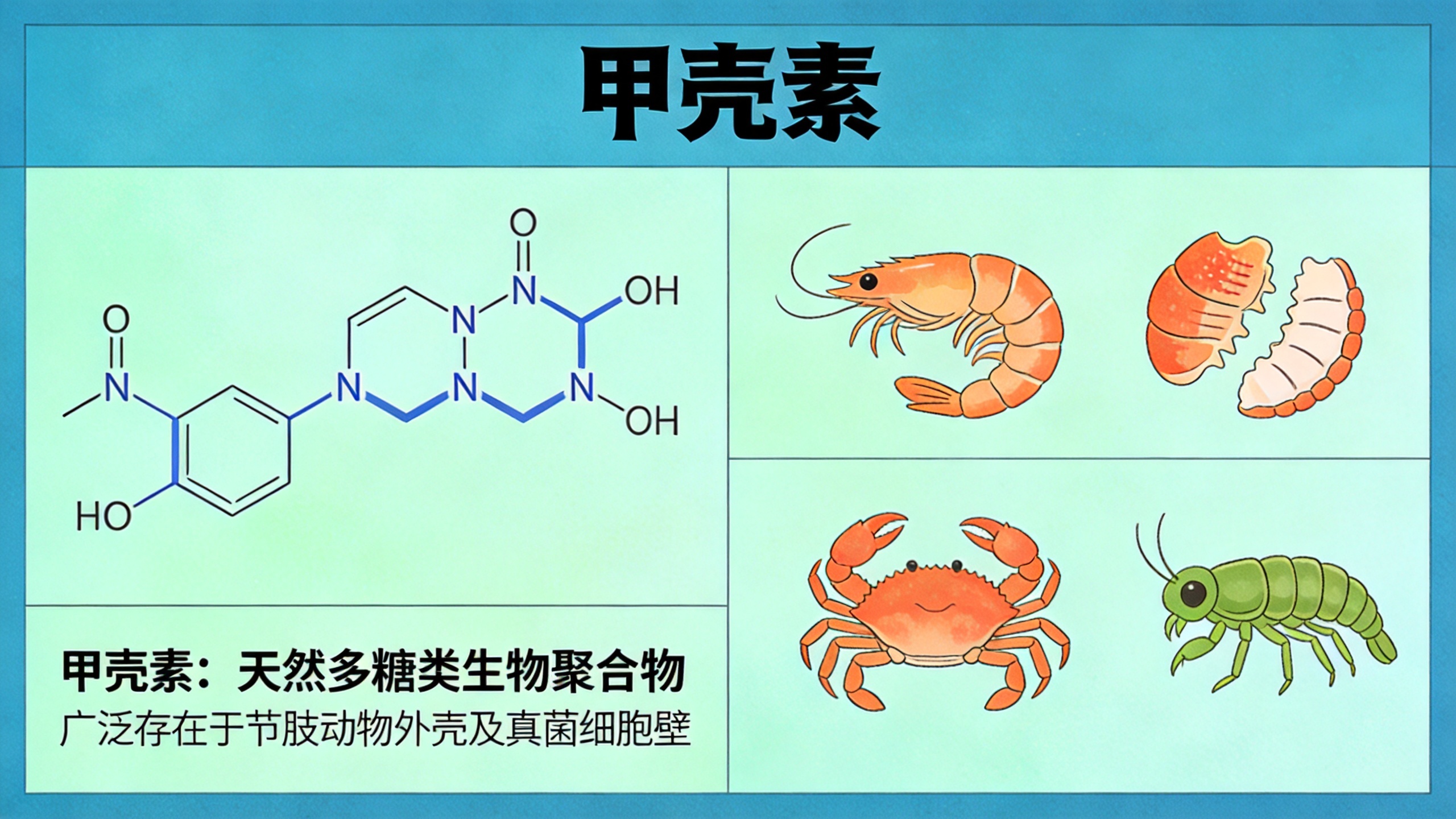


 Copy Link
 Share to WeChat
 Share to Weibo
 Submit Article








 (All Rights Reserved)
 沪公网安备31010402001403号
