Definition
1. Definition of entry
Definition of 1.1 Terms
ε-Polylysine (English name: ε-Polylysine, referred to as ε-PL) is a kind of naturally occurring homopolyamide biopolymer, which is formed by connecting L-lysine monomers through specific amide bonds. From the perspective of chemical structure, each L-lysine monomer of ε-polylysine is connected to each other through the amide bond formed by α-carboxyl group and ε-amino group (ε-amide bond), which makes it different from the α-peptide bond structure in common proteins. In nature, only ε-poly-L-lysine can be produced naturally by microbial fermentation, while α-polylysine needs to be prepared by chemical synthesis.
From the perspective of source properties, ε-polylysine is a typical natural preservative of microbial origin. The main producing strain is Streptomyces albicans (Streptomyces albulus), which synthesizes ε-polylysine through a complex metabolic pathway using glucose and other carbon sources as substrates under aerobic fermentation conditions. This biosynthesis process determines the essential properties of ε-polylysine as a food additive of natural origin, making it essentially different from preservatives prepared by chemical synthesis (such as sodium benzoate, potassium sorbate, etc.).
From the perspective of functional positioning, the main function of ε-polylysine is to be used as a food preservative. Its core mechanism is to achieve the inhibition or killing effect on bacteria, yeast, mold and other microorganisms by interfering with the function of microbial cell membrane, inhibiting enzyme activity and affecting the metabolism of genetic material, so as to extend the shelf life of food and maintain the quality and safety of food.
1.2 Nomenclature and Classification
Chinese name: ε-polylysine
English name: ε-Polylysine,ε-Poly-L-lysine,epsilon-Polylysine
Abbreviation: ε-PL
CNS: 17.037(ε-polylysine);17.038(ε-polylysine hydrochloride)
INS No.: This is not clearly defined in the authoritative information currently available.
CAS No:
-Polylysine: 28236-44-5
-Poly-lysine hydrochloride: 25104-18-1
-Some products are labeled: 25988-63-0, 28211-04-3
Chemical name: ε-poly 2,6-diaminocaproic acid
Molecular formula: the molecular formula of ε-polylysine can be expressed as H{[C + H + N2O]} OH(n = 25~35)
Structural formula: ε-polylysine is formed by connecting 25 to 35 L-lysine residues through ε-amide bonds, and its structural characteristics are that the ε-amino group of each lysine monomer forms an amide bond with the α-carboxyl group of the adjacent monomer, and the two ends of the main chain are α-amino group and α-carboxyl group respectively. This unique polymer structure confers ε-polylysine with physicochemical properties and biological functions that are significantly different from those of free L-lysine.
Relative molecular mass: 128.176n +18.016 (calculated according to the international relative atomic mass in 2018). When n = 25~35, the corresponding molecular weight is about 3200~4500 daltons.
1.3 physical and chemical properties
ε-polylysine appears as a white to yellowish powdery substance with a slightly bitter taste and strong hygroscopicity. In terms of solubility, ε-polylysine is easily soluble in water, and its water solubility can reach more than 500g/L, which makes it easy to add and uniformly disperse in water-based food systems; at the same time, ε-polylysine is slightly soluble in ethanol. Insoluble in organic solvents such as ethyl acetate and ethyl ether.
ε-polylysine has extremely excellent thermal stability. Studies have shown that its aqueous solution can still maintain complete antibacterial activity after being treated at a high temperature of 120°C for 20 minutes, and it does not decompose even under the sterilization condition of 121°C/30 minutes. This feature enables ε-polylysine to participate in the thermal processing process of food, maintain stability in the high temperature sterilization process, and provide continuous and effective anti-corrosion protection for thermally processed food.
In terms of pH adaptability, ε-polylysine exhibits a broad range of applicability. In the range of pH 2~9, ε-polylysine can maintain a strong antibacterial ability, which makes it adapt to different pH conditions of food system. It is worth noting that the activity of many traditional preservatives is significantly reduced under neutral or alkaline conditions, and the pH stability advantage of ε-polylysine just makes up for this defect and greatly expands its application range.
The isoelectric point of ε-polylysine is about 9.04. In acidic to weakly alkaline environment, due to the protonation of the ε-amino group in the ε-polylysine molecule, the molecule exhibits cationic properties, and this charge property is an important structural basis for its antibacterial activity.
Molecular weight has a significant effect on the antibacterial activity of ε-polylysine. The results showed that ε-polylysine with molecular weight in the range of 3600~4300 daltons (corresponding to degree of polymerization 25~35) had the best antibacterial activity. When the molecular weight was lower than 1300 daltons, ε-polylysine would lose its antibacterial activity.
1.4 Discovery Course
The discovery of ε-polylysine can be traced back to 1977. It was first successfully isolated and identified by Japanese scholars Shima Shoji and Sakai Heiichi in the fermentation broth of Streptomyces albicans (Streptomyces albulus). This landmark discovery opened the prelude to the research and application of ε-polylysine as a natural food preservative.
In 1989, the Ministry of Health, Labor and Welfare of Japan took the lead in approving the use of ε-polylysine as a food preservative. This is the first time that ε-polylysine has obtained an official food additive license. Since then, ε-polylysine has been widely promoted in the Japanese food industry, mainly used in the preservation of daily foods such as rice, noodles, sushi, sashimi, and salads.
2003 is the key year for the internationalization of ε-polylysine. S. Food and Drug Administration (FDA) approved epsilon-polylysine as a GRAS substance (Generally Recognized As Safe,GRAS No.000135), allowing its use as a preservative in food. In the same year, Hiraki and other scholars published important studies on the pharmacokinetics and safety evaluation of ε-polylysine, which systematically confirmed its safety as a food preservative.
In January 2004, ε-polylysine obtained GRAS certification in the United States.
Korea subsequently also approved the use of ε-polylysine as a food additive.
In 2014, the National Health and Family Planning Commission of China issued an announcement officially approving ε-polylysine as a new variety of food additives, which can be used in baked foods, cooked meat products and fruit and vegetable juice beverages. This milestone event marks the formal entry of ε-polylysine into the Chinese food market.
Since then, China has adjusted and expanded the use range and limit of ε-polylysine for many times. On February 8, 2024, the new version of GB 2760-2024 "National Food Safety Standards for the Use of Food Additives" was officially released, further clarifying the use of ε-polylysine.
1.5 production process
The industrial production of ε-polylysine mainly uses microbial fermentation, and its core process includes four main links: strain culture, fermentation production, separation and purification, and finished product processing.
Strain breeding: ε-polylysine producing strains were mainly Streptomyces albicans (Streptomyces albulus). The ability of the wild type strain to synthesize ε-polylysine is usually low, and the yield is only 0.2~0.7g/L. In order to improve the fermentation efficiency, researchers have developed a variety of strain improvement techniques, including traditional mutation breeding, genetic engineering improvement and so on. In 1998, Japanese scientists Hiraki and others used the "S-2-(aminoethyl)-L-cysteine (AEC)+ glycine" resistance screening combined with mutagenesis method to select mutant S. albulus 11011a, whose ε-polylysine yield reached 2.11g/L, about 10 times that of wild strains.
Fermentation process: ε-polylysine fermentation production using aerobic fermentation. The commonly used fermentation medium uses glucose or glycerol as carbon source, yeast powder, fish meal peptone as organic nitrogen source, ammonium sulfate as inorganic nitrogen source, and appropriate amount of phosphate, magnesium salt, iron salt, zinc salt and other inorganic salt ions. During the fermentation process, parameters such as temperature (about 30 ℃), pH value (initial pH 6.8, maintained at 3.6~4.0 in the later stage of fermentation) and dissolved oxygen (10% ~ 30%) should be strictly controlled.
In 2001, Kahar et al. established a two-stage pH control strategy for the first time. By maintaining the pH at about 4.0 in the later stage of fermentation, the accumulation of ε-polylysine was significantly promoted, and the yield reached 48.3g/L. This process breakthrough laid an important foundation for the industrial production of ε-polylysine.
Recent studies have shown that the fermentation yield of ε-polylysine can be further improved by optimizing the medium composition (especially the type and concentration of nitrogen source), using fed-batch fermentation strategy, and adding metabolic regulators such as epigallocatechin. Researchers from Tianjin University took Streptomyces albicans CICC11022 as the research object, and through systematic optimization of fermentation conditions, the yield of ε-polylysine was successfully increased from 0.70g/L to 2.89g/L (an increase of 3.1 times). When L-lysine was added exogenous, the yield was further increased to 4.13g/L.
Separation and purification: After fermentation, ε-polylysine mainly exists in the fermentation broth. Separation and purification usually use ion exchange resin adsorption method-the use of epsilon-polylysine cation characteristics, so that it is adsorbed by the cation exchange resin, and then acidic solution (hydrochloric acid or sulfuric acid) elution, and finally concentrated, dried to get the finished product. For ε-polylysine hydrochloride products, the use of amylase chromogenic Streptomyces (Streptomyces diastatochromogenes) fermentation, by ion exchange resin adsorption, hydrochloric acid elution and refined.
1.6 antibacterial mechanism
The antibacterial mechanism of ε-polylysine is the core scientific basis for its antiseptic function. Current studies have shown that ε-polylysine plays a bacteriostatic effect mainly through the following multiple pathways:
Acting on the cell membrane system: As a cationic polypeptide, ε-polylysine can bind to the negatively charged parts of the surface of the microbial cell membrane (such as the phosphate group of the phospholipid head) through electrostatic adsorption. This binding disrupts the electrostatic balance and structural integrity of the cell membrane, resulting in increased permeability of the cell membrane. When the concentration of ε-polylysine reaches a certain threshold, holes or channels will be formed on the surface of the cell membrane, causing intracellular substances (such as potassium ions, proteins, nucleic acids, etc.) to leak out, and extracellular substances enter the cell, eventually leading to cell death. The results showed that the minimum inhibitory concentrations (MIC) of ε-polylysine against Staphylococcus aureus, Escherichia coli and other common foodborne pathogens were 50 μg/mL and 150 μg/mL, respectively.
Affect enzyme activity: ε-polylysine can interact with a variety of enzyme proteins in microorganisms and inhibit their activity. Studies have found that ε-polylysine can inhibit the activity of some enzymes involved in energy metabolism (such as succinate dehydrogenase) in Staphylococcus aureus, interfere with the energy metabolism process of cells, thereby inhibiting the growth and reproduction of microorganisms.
Acting on genetic material: ε-polylysine molecules can enter the microbial cell and bind to DNA or RNA. This binding may affect the replication, transcription and translation of genetic material and interfere with the normal growth and division of microorganisms. Studies have suggested that ε-polylysine may affect protein biosynthesis by binding to ribosomes.
Synergistic mechanism: When ε-polylysine is used in combination with other antibacterial substances, it can often produce synergistic effects. For example, when ε-polylysine is used in combination with acetic acid, the acidic environment of acetic acid facilitates ε-polylysine to better approach and penetrate the microbial cell membrane, thereby enhancing the inhibitory effect on microorganisms such as Bacillus subtilis.
Industry Overview
2. Industry Overview
Global Food Preservatives Market in 2.1
The food preservative industry is an important part of the modern food industry, and its development level is directly related to food supply safety, quality assurance and market circulation efficiency. According to data Research by market Verified, a market research organization, the global food preservative market will reach $3.45 billion in 2024 and is expected to grow to $4.76 billion by 2032, with a compound annual growth rate of about 4.5 per cent.
In terms of regional distribution, the Asia-Pacific region is the market with the largest demand for food preservatives in the world, contributing about 42.3 per cent of global demand in 2025, of which China, India and Southeast Asia together account for 32.5 per cent. The North American and Western European markets together accounted for about 34.6 per cent, but growth slowed to less than 1.2 per cent, mainly due to tighter regulations in mature markets and increased consumer awareness of resistance to chemical additives.
In terms of product types, synthetic preservatives still dominate the market, with a market share of more than 69% in 2023. However, the natural preservatives market is showing strong growth and is expected to grow at a compound annual growth rate of 7.5 per cent by 2030, significantly higher than the overall market growth rate. The main driving factors for the growth of the natural preservatives market include the continuous growth of consumer demand for "clean label" products, the increasingly strict regulation of food additives by governments in various countries, and the continuous maturity and cost reduction of natural preservatives production technology.
Current Situation of Chinese Food Preservatives Industry in 2.2
As the world's largest food producer and consumer, China's food preservative market will be about $2.18 billion billion in 2025, accounting for 24.9 percent of the global total. The development of China's food preservative industry shows the following remarkable characteristics:
Accelerated adjustment of market structure: The product structure of the industry is undergoing a critical stage of accelerating the transformation from traditional chemical preservatives to natural and biological preservatives. Mainstream chemicals such as potassium sorbate and sodium benzoate still account for about 65% of the market share, but natural preservatives represented by nisin, natamycin and plant extracts have grown significantly, with an average annual growth rate of more than 12%.
Industrial layout tends to be concentrated: major domestic production enterprises have formed a large-scale production capacity layout, with a total industry production capacity of about 350000 tons in 2025. East China and South China have become the main market for preservative consumption due to the agglomeration of food processing and cosmetics industries, accounting for more than 50% of the total. With the improvement of cold chain infrastructure and the rise of prefabricated vegetable industry in the central and western regions, the demand potential is gradually released.
Import and export advantages are obvious: China has significant advantages in the production of raw materials and the export of finished products. Exports of natural preservatives will reach 147000 tons in 2025, an increase of 62.4 over 2020, mainly to Southeast Asia, the Middle East and Latin America. Export products are mainly cost-effective chemical preservatives, while high-purity, high-stability natural preservatives are still partially dependent on imports.
2.3 Natural Preservatives Market Segment
The natural preservative market is currently one of the most promising segments of the food additive industry. The global natural preservatives market size is about $1.01 billion billion in 2025 and is expected to grow to $2.125 billion billion by 2036, with a compound annual growth rate of about 7.0 per cent.
Natural preservatives can be divided into three main categories according to their sources:
Plant-derived preservatives: including tea polyphenols, rosemary extract, bamboo leaf antioxidants, etc. This kind of preservatives mainly through the phenolic, flavonoids and other active ingredients to play an antioxidant and antibacterial effect.
Animal source preservatives: including chitosan, protamine, etc. Chitosan is derived from the shell of shrimp and crab, which has good film-forming and cationic properties; protamine is derived from fish testis extract, which has strong thermal stability and outstanding antibacterial effect in neutral/alkaline environment.
Preservatives of microbial origin: including nisin, natamycin and ε-polylysine. These three preservatives are the most widely used natural preservatives of microbial origin, which are often called "three natural food preservatives". Among them, ε-polylysine is known as the "broad-spectrum champion of natural preservatives" for its broadest antibacterial spectrum and best pH adaptability ".
2.4 the position of ε-polylysine in the industry
As one of the three major natural food preservatives, ε-polylysine occupies a unique position in the industry. Compared with nisin and natamycin, ε-polylysine has the following differentiating advantages:
The broadest antibacterial spectrum: ε-polylysine has significant inhibitory effect on gram-positive bacteria, gram-negative bacteria, yeast and mold, and is the widest antibacterial spectrum among the three natural preservatives. In contrast, nisin mainly inhibits gram-positive bacteria, and natamycin mainly inhibits mold and yeast.
The best pH adaptability: ε-polylysine maintained effective activity in the range of pH 2~9, while the antibacterial effect of natamycin decreased above pH 6.5, and nisin was less stable below pH 3.5. This property enables ε-polylysine to be adapted to more types of food systems.
Excellent thermal stability: ε-polylysine can withstand high temperature treatment at 121 ℃ for 30 minutes without decomposition, while the activity of nisin will be lost under high temperature conditions. This advantage makes ε-polylysine more suitable for foods requiring high temperature processing.
The highest consumer acceptance: As a natural polypeptide that can be completely degraded into L-lysine, ε-polylysine is known as a "nutritional preservative", which is in line with consumers' pursuit of health, safety and natural food.
2.5 Industry Chain Analysis
The ε-polylysine industry chain covers the complete link from raw material supply to terminal application.
Upstream link: mainly includes fermentation raw materials (glucose, yeast powder, ammonium sulfate, etc.), production equipment (fermentation tank, centrifuge, ion exchange column, drying equipment, etc.) and production technology research and development and transfer. The core competitiveness of the upstream link lies in the optimization level of strain breeding technology and fermentation process.
Midstream link: mainly the production and manufacture of ε-polylysine. Globally, many companies in Japan, China, South Korea and other countries are engaged in the commercial production of ε-polylysine. China's production enterprises after years of development, has a large-scale production capacity, product quality to GB 1886.362-2022 and other national standards.
Downstream links: covering the application of ε-polylysine in food, daily chemicals, medicine, feed and other fields. The food sector is the largest application market for ε-polylysine, including baked goods, meat products, beverages, condiments and other sub-sectors.
2.6 Consumption Trends and Drivers
The development of the epsilon-polylysine market is driven by multiple factors:
Clean label movement: Globally, more and more consumers are opting for foods with simple ingredients and natural sources. The clean label movement is pushing food companies to seek natural alternatives to traditional chemical preservatives, and epsilon-polylysine is favored for its natural origin and safety advantages.
Food safety awareness: In recent years, frequent food safety incidents have increased consumers' attention to food safety. As a natural preservative with strict safety evaluation, ε-polylysine can effectively inhibit a variety of food-borne pathogens and help to improve food safety.
Regulatory promotion: Governments are increasingly strict in the regulation of food additives, and the scope and limits of the use of some traditional chemical preservatives are adjusted. This trend has created market space for natural preservatives such as ε-polylysine.
Technological progress: The continuous optimization of ε-polylysine fermentation production technology has reduced production costs, improved product purity and stability, and promoted the expansion of its market application.
Technical Standards
3. Technical standards
3.1 International Standards and Certification
U.S. FDA GRAS Certification: In 2003, ε-polylysine obtained GRAS(Generally Recognized As Safe) certification from the U.S. Food and Drug Administration (FDA) with GRAS No.000135. This certification is based on comprehensive safety assessment data confirming the safety of ε-polylysine as a food preservative.
JECFA evaluation: The Joint FAO/WHO Expert Committee on Food Additives (JECFA) conducted a systematic evaluation of epsilon-polylysine. Based on various data from acute and subchronic toxicity studies, mutagenicity studies, and pharmacokinetic studies, JECFA does not set an upper limit of acceptable daily intake (ADI) for ε-polylysine, which means that its safety is considered unrestricted under reasonable use conditions.
Japan's license: In 1989, Japan's Ministry of Health, Labor and Welfare approved the use of ε-polylysine as a food preservative, and it was the first country in the world to approve the application of ε-polylysine food additives.
Registration in Korea: The Ministry of Food and Drug Safety of Korea approved the use of ε-polylysine as a food additive.
3.2 China National Standard System
GB 1886.362-2022 National Food Safety Standard Food Additive ε-Polylysine:
The standard was issued on June 30, 2022 and implemented on December 30, 2022. It stipulates the technical requirements for ε-polylysine as a food additive.
Scope of application: This standard is applicable to the food additive ε-polylysine obtained by aerobic fermentation of Streptomyces albicans (Streptomyces albulus) with yeast extract or other nitrogen-containing substances as main raw materials.
Technical requirements:
Sensory requirements:
-Color: White to light yellow
-Status: powder, no caking
-Odor: No peculiar smell
Physical and chemical indicators:
-ε-polylysine content (on dry basis):≥ 94.0%
-Drying loss: ≤ 5.0%
-Residue on ignition: ≤ 2.0%
-Lead (Pb):≤ 1.0 mg/kg
-Total arsenic (As):≤ 0.5 mg/kg
GB 1886.371-2023 National Food Safety Standard Food Additive ε-Polylysine Hydrochloride:
This standard was issued on September 6, 2023 and implemented on March 6, 2024. It is the quality standard for ε-polylysine hydrochloride products.
Scope of application: This standard is applicable to the food additive ε-polylysine hydrochloride obtained by controlled fermentation of amylase-producing Streptomyces (Streptomyces diastatochromogenes), adsorption of ion exchange resin, elution of hydrochloric acid and purification of the culture solution.
Technical requirements:
Sensory requirements:
-Color: pale yellow to white
-Status: Powder, no foreign body visible in normal vision
-Odor: No peculiar smell
Physical and chemical indicators:
-ε-polylysine hydrochloride content (on dry basis):≥ 95.0%
-Chloride content (based on Cl, dry basis):19.0%~ 22.0
-Drying loss: ≤ 8.0%
-pH(10g/L aqueous solution):2.5~5.5
-Residue on ignition: ≤ 2.0%
-Lead (Pb):≤ 1.0 mg/kg
-Total arsenic (As):≤ 1.0 mg/kg
3.3GB 2760-2024 Usage Regulations
GB 2760-2024 "National Food Safety Standards for the Use of Food Additives" was issued on February 8, 2024, and officially implemented on February 8, 2025. The scope of use of ε-polylysine and ε-polylysine hydrochloride And the maximum use amount is clearly stipulated.
The use of epsilon-polylysine (CNS 17.037) specifies:
| Food Classification Number | Food Name | Maximum Usage |
| ----------- | --------- | ---------- |
| 07.0 | Bakery | 0.15 g/kg |
| 08.03 | Cooked Meat Products | 0.25 g/kg |
| 14.02.03 | Fruit and Vegetable Juice (Pulp) Beverage | 0.2g/L |
Provisions for the use of ε-polylysine hydrochloride (CNS 17.038):
| Food Classification Number | Food Name | Maximum Usage |
| ----------- | --------- | ---------- |
| 04.0 | fruits, vegetables (including root tubers), beans, edible fungi, algae, nuts and seeds (except some) | 0.30 g/kg |
| 14.0 | Beverage | 0.20 g/kg |
Description of the scope of use:
The scope of use of ε-polylysine covers baked goods (bread, cakes, biscuits, etc.), cooked meat products (stewed meat, smoked roast meat, fried meat, meat sausage, etc.), fruit and vegetable juice drinks and other categories. Among them, ε-polylysine hydrochloride is used in a wider range, including fruits, vegetables and processed products thereof, beverages, etc.
Note:
-canned foods are explicitly prohibited from using ε-polylysine hydrochloride
-Increase the amount of solid beverage by dilution multiple
-Fruit and vegetable juice beverages in ready-to-drink state
3.4 product specifications and testing methods
Appearance of the product: ε-polylysine is a white to light yellow powder with slight bitterness and hygroscopicity.
Identification test:
-Bismuth potassium iodide precipitation reaction: ε-polylysine solution reacts with bismuth potassium iodide reagent to generate brown red precipitate
-Methyl orange precipitation reaction: in phosphate buffer (pH 6.8), ε-polylysine solution reacts with methyl orange reagent to produce reddish brown precipitate
-Thin layer chromatography: through the identification of hydrolysis products, the sample hydrolysate should have the same Rf value as the L-lysine standard
Content determination: using high performance liquid chromatography (HPLC), with UV detector or diode array detector detection, external standard method for quantitative.
Molecular weight distribution: ε-polylysine is composed of 25-35 L-lysine residues and has a molecular weight of about 3600-4500 daltons. The polymerization degree distribution can be confirmed by reverse phase chromatography analysis, and the data show that the molecular weight distribution is concentrated (Mw/Mn -1.14), reflecting the uniformity of the fermentation product.
3.5 compound use technology
ε-polylysine is often used in conjunction with other substances in practical applications to achieve efficiency and economy. Common compounding methods include:
Compound with organic acids: commonly used organic acids include acetic acid, citric acid, malic acid, maleic acid, succinic acid, etc. The amount used is usually between 0.5 and 50%. This kind of compounding method is mainly used in rice, beverage, salad sauce and other foods.
Compound with alcohol: the usage is 30% ~ 70%, mainly used in various egg products.
Compound with glycerides: glycerides are mostly lower fatty acid esters with a dosage of 0.01 to 5%, which are mainly used for foods with more animal protein and milk protein.
And glycine compound: glycine dosage is 0.01%~ 10%, mainly used in milk preservative. Studies have shown that 420mg/L ε-polylysine combined with 2% glycine has the best effect and can extend the shelf life of milk to 11 days.
In combination with other natural bacteriostatic agents:
-Combined with natamycin: ε-polylysine targets bacteria and natamycin targets mold/yeast to form broad-spectrum antibacterial coverage
-Combined with nisin: the two have a synergistic effect on the preservation of chilled meat, which can extend the shelf life from 7 days to 21 days
-Compound with Chitosan: Enhanced inhibitory effect on Gram-negative bacteria
-Compound with plant extracts: such as compound with tea polyphenols, can improve antioxidant and antibacterial effect at the same time
Synergistic application of enzyme preparations: In baked goods, ε-polylysine is often used in conjunction with enzyme preparations such as α-amylase and glucoamylase. The enzyme preparation decomposes part of starch to produce small molecular sugars such as maltose, which can be used as a carbon source for ε-polylysine fermentation production, but more importantly, the enzyme preparation helps to improve dough texture, delay product aging, and form a synergistic effect with the preservative effect of ε-polylysine.
Application Areas




 Buyer
Buyer Supplier


 Copy Link
 X
X Facebook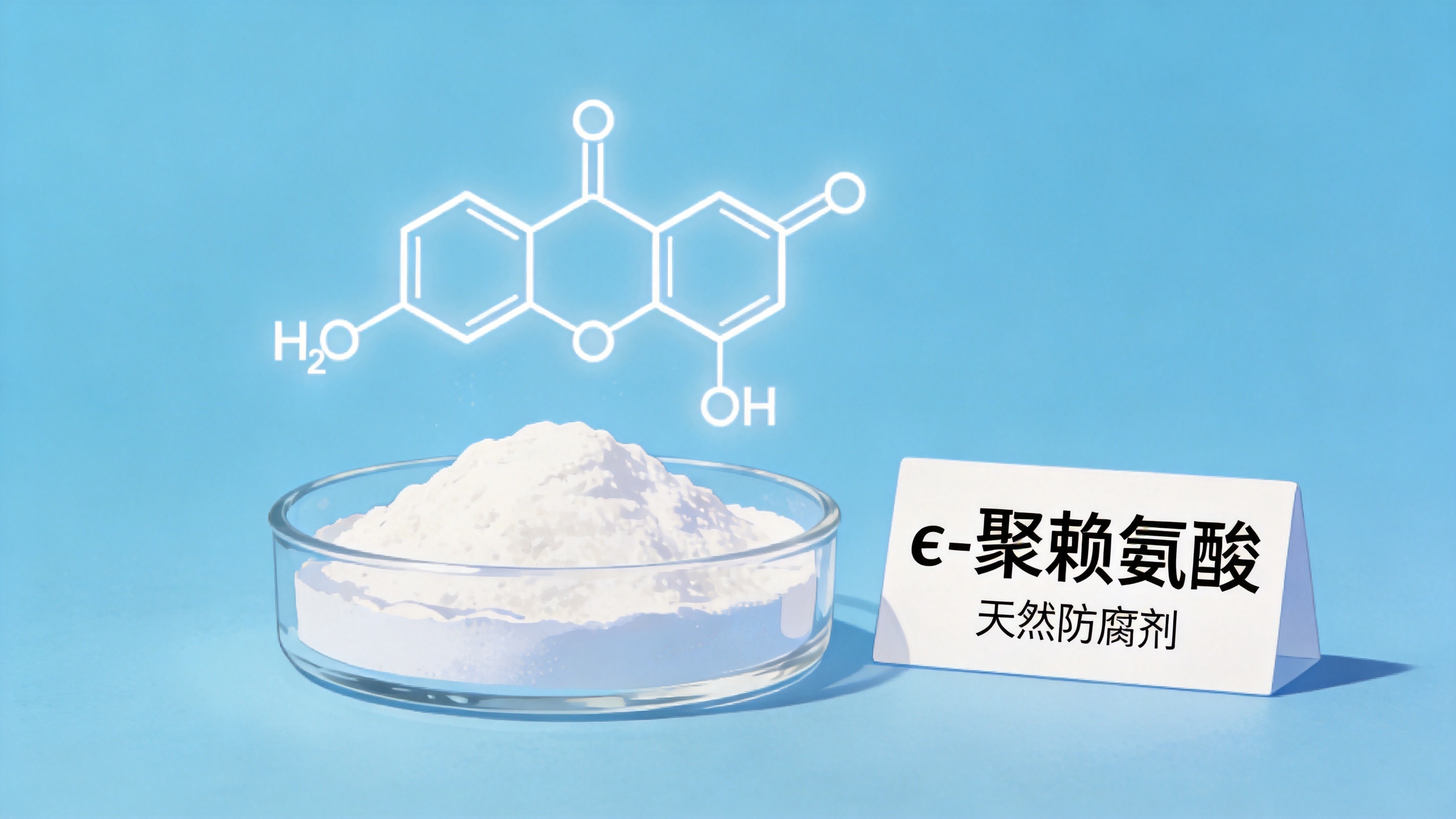


 Copy Link
 Share to WeChat
 Share to Weibo





 Submit Article








 (All Rights Reserved)
 沪公网安备31010402001403号
