Definition
Definition of core concepts
Polydextrose (English name: Polydextrose, international code: INS No.1200, EU E code: E1200, China CNS number: 20.022) is a synthetic soluble dietary fiber polysaccharide substance, which belongs to the categories of thickeners, leavening agents, moisture retention agents and stabilizers in food additives. Its chemical nature is a high molecular polymer formed by random polymerization of D-glucose units, and contains the structural characteristics of sorbitol terminal group and citric acid (or phosphoric acid) ester linkage.
chemical structure and composition
From the perspective of molecular structure, polydextrose is a random cross-linked polymer produced by melt polycondensation reaction of about 90%(w/w) D-glucose, 10%(w/w) sorbitol and 1%(w/w) citric acid or 0.1 (w/w) phosphoric acid at high temperature (about 140-180°C). The main glycosidic bonding mode is 1,6-glycosidic bond, and there are mixed structures of 1,2-, 1,3-, 1,4-and other bonding modes. This highly branched random structure makes polyglucose present a complex spatial conformation, which is different from the regular structure of amylose.
According to the specifications of JECFA (FAO/WHO Joint Expert Committee on Food Additives), polydextrose products contain small amounts of free glucose, sorbitol, levoglucan (1,6-anhydro-D-glucose) and citric acid residues in addition to the main polymers. The product specification can be neutralized and decolorized to obtain a Polydextrose-N product with a pH value in the range of 5.0-6.0. The pH value of the product without neutralization treatment is 2.5-7.0.
Physical and Chemical Properties
Polydextrose appears in physical form as a white to light brown powder or granular solid, odorless or with a slightly acidic odor. Its solubility in water is very high, up to 70-80g/100mL(25 ℃), forming a clear or light yellow transparent solution. Polydextrose is slightly soluble in glycerol and propylene glycol and almost insoluble in ethanol. This solubility makes it an ideal source of water-soluble dietary fiber for use in a variety of liquid and semi-solid foods.
The viscosity of polydextrose solution is temperature-dependent: the viscosity decreases with increasing temperature and increases with increasing concentration. At the same concentration, the viscosity of polydextrose solution was slightly higher than that of sucrose solution. Polydextrose also has the ability to control water activity, when the water activity is greater than 60%, its moisturizing effect is particularly significant. A 10% aqueous solution of the product has a pH of about 2.5-7.0 (depending on the degree of neutralization) and a melting point of more than 130°C. Due to its strong hygroscopicity, it is recommended to store it under dry and sealed conditions.
Metabolic characteristics and physiological significance
From the perspective of nutritional metabolism, polydextrose exhibits unique and beneficial physiological properties. As a non-starch polysaccharide dietary fiber, polydextrose is hardly digested and absorbed in the upper part of the stomach and small intestine, about 30% is fermented to produce short chain fatty acids (SCFA) and carbon dioxide under the action of large intestine microorganisms, and 60% is excreted from feces in the original form. Its energy value is about 1kcal/g, only 25% of sucrose and 11% of fat, which is a very low calorie carbohydrate.
This special metabolic pathway gives polydextrose multiple health benefits: first, it does not directly participate in blood glucose metabolism, and its glycemic index (GI) is very low (about 5-10), which is suitable for diabetic patients; second, as an effective prebiotic substance, it can selectively promote the proliferation of beneficial bacteria such as Bifidobacterium and Lactobacillus, and inhibit the growth of harmful bacteria such as Clostridium, the short-chain fatty acids (especially butyric acid) produced by colonic fermentation can reduce the intestinal pH value and regulate the intestinal microecological balance; fourth, it can combine with bile acids and promote their excretion, which helps to reduce serum cholesterol levels; fifth, It has the effect of promoting the absorption of minerals such as calcium and magnesium.
Terminology Discrimination and Conceptual Boundary
In the context of food science and nutrition, there is a clear distinction between polydextrose and related concepts. The difference with ordinary sugars: traditional sucrose, glucose, etc. are monosaccharides or disaccharides that can be directly absorbed by the human body, providing direct energy; while polydextrose, as a high molecular polysaccharide, is not directly absorbed by the small intestine, and its heat contribution is very low. The difference between insoluble dietary fiber and insoluble dietary fiber: cellulose and other insoluble fibers mainly play a laxative effect by increasing the volume of feces; as a soluble dietary fiber, polydextrose has multiple functions such as water swelling, prebiotic regulation, and metabolic regulation. The difference between modified starch and modified starch: modified starch through chemical modification to change the nature of natural starch; Polydextrose is a new polymer synthesized from monomer glucose through polycondensation reaction, and its structure and source are different from natural polysaccharides.
historical evolution and development
Commercial development of polydextrose began in the late 1960 s, when it was first created by Dr. Hans H. Rennhard of the Central Research Laboratory of Pfizer Pharmaceutical Company in the United States while working on low-calorie fillers. In 1973, Pfizer protected the preparation process of polydextrose by U.S. Patent No. 3,766,165. In 1981, the US FDA approved the use of polydextrose as a food additive (21 CFR 172.841), creating a precedent for its industrial application. Since then, polydextrose has been rapidly promoted worldwide and has been approved for use in more than 50 countries and regions, including China, EU member states, the United States, Japan, South Korea, Australia, etc.
In China, the development of polydextrose is closely linked to the modernization of the food industry. In 2010, the former Ministry of Health issued GB 25541-2010 "National Food Safety Standard Food Additive Polydextrose", establishing the first national standard for polydextrose product quality specifications in China. In March 2025, the new version of GB 1886.385-2025 was released and will be implemented in September of the same year, further improving product classification (solid/liquid, neutral/common) and detection methods (new high-performance liquid chromatography). In the national food safety standard system of GB 2760, polydextrose has always been included as an important food additive. The latest version of GB 2760-2024 stipulates that it should be used in frozen drinks, baked goods, dairy products, beverages, meat products, candy, jelly and other types of food "according to production needs 」.
Industry Overview
Overview of Global and Chinese Polydextrose Industry Development
industrial chain structure analysis
The industry chain of the polydextrose industry presents a typical three-stage structure of "upstream raw material supply-midstream manufacturing-downstream application expansion", with each link closely connected and influencing each other.
Upstream raw material supply chain: The main raw materials of polydextrose include glucose, sorbitol and citric acid (or phosphoric acid). Glucose as the core monomer, usually in the form of starch hydrolysis sugar supply, the main source of domestic corn starch deep processing. The upstream raw material market belongs to the mature bulk chemicals field, and price fluctuations have a direct impact on the production cost of polydextrose. It is worth noting that the quality of raw materials (especially glucose purity and moisture content) directly affect the polymerization reaction efficiency and product quality, so the industry head enterprises generally established a strict incoming inspection system.
Midstream production and manufacturing links: Polydextrose production using high-temperature melt polycondensation process, technical barriers are mainly reflected in the polymerization reaction parameter control, molecular weight distribution adjustment, product post-treatment refining and so on. At present, the main domestic production enterprises include Baolingbao Biology, Shandong Bailongchuangyuan, Henan Tailijie, Shandong Minqiang Biotechnology, etc.; in the international market, Tate & Lyle (Tate & Lyle), Dennisco (Danisco/Cargill) and other multinational enterprises occupy an important position. The concentration of the midstream industry is relatively high, the CR5 market share is estimated to be more than 60%, and the technical advantages and scale effect of the head enterprises are obvious.
Downstream applications: The end applications of polydextrose cover multiple segments of the food industry. According to the application scenarios, it can be divided into: dairy products (yogurt, lactic acid bacteria drinks, modified milk, etc.), frozen drinks (ice cream, ice cream, etc.), baked goods (bread, cakes, biscuits, etc.), beverages (solid drinks, protein drinks, flavor drinks, etc.), candy chocolate, meat products, condiments, jelly pudding, etc. In addition, in health care products, pharmaceutical accessories, animal feed and other fields also have application expansion. The functional demands of downstream customers for polydextrose mainly focus on improving dietary fiber content, reducing calories, improving texture and taste, and extending shelf life.
Market size and growth trend
According to the data of Mordor Intelligence, a well-known international market research institution, the global polydextrose market size is about US $0.48653 billion in 2025 and is expected to reach US $0.90474 billion in 2030, with a compound annual growth rate (CAGR) of 13.45 from 2025 to 2030. From the perspective of regional distribution, Europe is currently the largest consumer market, and the Asia-Pacific region is the fastest growing regional market. The global water-soluble dietary fiber market as a whole is larger and is expected to reach about $15.87 billion by 2026, of which polydextrose accounts for about 22.1 percent (about $3.507 billion).
In the domestic market, with the improvement of residents' health awareness and the upgrading of the food industry, China's polydextrose industry has developed rapidly. In 2019, the output value of China's dietary fiber industry is about 3.831 billion yuan, with an output of 189500 tons; it is expected that by 2026, the output value will reach 5.527 billion yuan, with an output of 303600 tons. As an important variety of water-soluble dietary fiber, the application of polydextrose in the domestic market has gradually expanded from the early high-end functional food to the mass food field. It is worth noting that the market size of China's water-soluble dietary fiber reached 12.13 billion billion yuan in 2025, an increase of 23.8 over the same period last year, and the growth rate was significantly higher than the overall level of the food additive industry.
Industry development stage and characteristics
China's polydextrose industry has experienced an evolution from scratch, from import dependence to independent development, from single application to diversified expansion, which can be roughly divided into the following three stages:
Phase I (1990 s -2005): Introduction period. During this period, the domestic polydextrose market was almost entirely dependent on imports, and only a few domestic enterprises conducted small-scale trial production. Terminal applications are limited to a few high-end health foods and special medical formula foods, and ordinary consumers have low awareness of polydextrose.
The second stage (2005-2020): growth period. Domestic enterprises have gradually achieved technological breakthroughs, and the scale of production capacity has continued to expand. The release and implementation of the national standard GB 25541-2010 laid the foundation for the standardized development of the industry. At the same time, the rise of functional food and low calorie food market has driven the growth of polydextrose demand. Domestic enterprises have accumulated a lot of experience in formula application and market development, and the product quality is gradually approaching the international level.
Phase 3 (2020-present): Upgrade period. With the promotion of the "Healthy China 2030" planning outline and the upgrading of consumer health demands, the application field of polydextrose has been further expanded. The release of the new standard GB 1886.385-2025 marks a new stage of high-quality development in the industry, which puts forward higher requirements for product quality, safety indicators and testing methods. High purity (≥ 95%), organic certification, functional derivatives have become the direction of industry upgrading.
Regional Pattern and Competitive Situation
From the production side, China's polydextrose production capacity is mainly concentrated in Shandong, Henan, Jiangsu and other provinces, forming an industrial cluster with Shandong as the core. Shandong Province has a number of large-scale enterprises such as Baolingbao and Bailong Chuangyuan, with complete upstream and downstream supporting facilities and obvious logistics cost advantages. From the consumer side, the eastern coastal area is the main consumer market for polydextrose, which is closely related to the developed food industry and high consumption level in the region. With the development of the food industry and the improvement of residents' health awareness in the central and western regions, the demand growth potential is huge.
In terms of international competition, the global polydextrose market presents a "two super-strong" situation. Tate & Lyle (Tate & Lyle) and Dennisco (Danisco, now Cargill) dominate the international market with their technology accumulation, brand influence and global presence. Domestic enterprises rely on localized services, cost advantages and policy support to gradually establish competitive advantages in the low-end market and actively develop export business. In recent years, the entry of synthetic biology start-ups has brought new possibilities of technological change to the industry.
Industry Pain Points and Development Challenges
Despite the promising market, the Chinese polydextrose industry faces several challenges:
Import dependence on high-end products. Although the domestic ordinary polydextrose production capacity is sufficient, high-end products such as high-purity (polydextrose content ≥ 95%), low polymerization degree (DP ≤ 10), and organic certification are still partially dependent on imports. This reflects the gap between domestic enterprises in deep purification technology, organic raw material supply, international certification system and so on.
International standard certification barriers. International standards such as FSSC 22000 certification in the EU market and FDA on-site audit in the US market put forward higher requirements for the quality management system and traceability of domestic enterprises. Technical barriers to trade increase the uncertainty of export business.
Homogeneous competitive pressure. There is a certain degree of homogenization competition in the domestic polydextrose market, and the product quality and brand influence of some small and medium-sized enterprises need to be improved. The trend of industry consolidation is obvious, and enterprises with leading technology and brand advantages are expected to gain greater market share.
Downstream application R & D capabilities. The functional performance of polydextrose in different food systems is different, and the formula needs to be optimized according to the specific application scenario. The differentiated innovation demand of terminal food enterprises puts forward higher requirements for the application technology service ability of raw material suppliers.
Drivers and Development Opportunities
Looking to the future, the development of China's polydextrose industry is mainly driven by the following factors:
Policy support and standard improvement. The national "14th Five-Year Plan" bio-economic development plan lists functional sugar alcohols and dietary fiber as key development directions. The "Healthy China 2030 Plan Outline" incorporates the compliance rate of dietary fiber intake into the national nutrition improvement index, creating a favorable policy environment for the development of the industry. The release and implementation of the new version of GB 1886.385-2025 will further standardize the market order and promote the healthy development of the industry.
Consumption upgrade and health appeal. With the improvement of residents' health awareness and the enhancement of their ability to pay, consumers' demand for functional foods and low-calorie foods continues to grow. As a scientifically verified functional ingredient, polydextrose is in line with the consumption trend of "clean label" and "less sugar and less added.
Technological innovation and product upgrading. The application of new technologies such as gene editing strains and continuous fermentation processes is expected to improve polydextrose production efficiency and product quality. The development of functional derivatives (low GI value, high solubility, etc.) will further expand the application boundary.
Export market expansion. The development of the food industry in countries along the Belt and Road has created new opportunities for the export of Chinese polydextrose products. As the fastest growing market in the world, the Asia-Pacific region will provide a broad space for domestic enterprises to develop.
Technical Standards
Polydextrose Technical Standard System
international standard system
Codex Alimentarius (Codex Alimentarius) standard
The international specifications for polydextrose are developed and regularly updated by the Joint FAO/WHO Expert Committee on Food Additives (JECFA). According to the specifications issued by the 51st meeting of JECFA (1998), polydextrose (Polydextroses,INS No.1200) is defined as "a randomly bonded glucose polymer prepared by melt polycondensation of about 90 parts of D-glucose, 10 parts of sorbitol and up to 1 part of citric acid or 0.1 parts of phosphoric acid, accompanied by sorbitol end groups, and citric acid or phosphoric acid residues are connected to the polymer through monoester or diester bonds. Polymers are dominated by 1,6-glycosidic bonds, but other bonding methods also exist. 」
The key indicators of JECFA specifications include: polydextrose content (on a dry basis and without ash) not less than 90.0%; 5-hydroxymethylfurfural content not more than 0.1%(on a dry basis and without ash);pH value 2.5-7.0(1:10 solution); Sulfurated ash content not more than 0.3%(ordinary type) or 2.0%(neutralized type); moisture not more than 4.0%(Karl Fischer method); nickel content for hydrogenated polydextrose, not more than 2 mg/kg.
JECFA Safety Assessment
JECFA conducted a systematic safety assessment of polydextrose at its 31st meeting in 1987, establishing the conclusion of "ADI not specified. This conclusion means that under normal conditions of use, there is no safety issue with polydextrose and there is no need to set a specific upper limit of daily allowable intake. The assessment is based on comprehensive toxicological data, including studies of acute toxicity, subchronic toxicity, chronic toxicity/carcinogenicity, reproductive and developmental toxicity, and genotoxicity. The results showed that the mouse's transoral LD is greater than 30g/kg, the rat's transoral LD is greater than 19 g/kg, and the dog's transoral LD is greater than 20 g/kg, all of which belong to the actual non-toxic level. In chronic toxicity studies in rats, no adverse effects were seen at doses up to 12,500 mg/kg body weight/day and 15,000 mg/kg body weight/day in mice. In reproductive and developmental toxicity studies, no adverse effects were observed in both rats at 10,000 mg/kg bw/day and rabbits at 1,818 mg/kg bw/day.
European Union (EFSA) Standards and Re-evaluation
Under the framework of the European Food Safety Authority (EFSA), polydextrose has the E code E1200 and belongs to the category of thickeners/stabilizers approved for use in food additives. EFSA issued a re-evaluation opinion on E1200 in 2021. The re-evaluation concluded that, according to the conceptual framework assessment, the safety of polydextrose does not require a numerical ADI, as there are no safety concerns at the reported use amounts and levels of use. EFSA also recommended that the European Commission consider lowering the maximum limit of lead and introducing limit requirements for arsenic, cadmium and mercury in EU specifications.
US FDA regulations
The U.S. Food and Drug Administration (FDA) classifies polydextrose as a generally recognized as safe (GRAS) substance, as specified in 21 CFR Part 172 Subpart I § 172.841. According to the regulation: polydextrose (CAS Reg. No. 68424-04-4) is a partially metabolizable water-soluble polymer, which is prepared by polycondensation of a melt of about 89% D-glucose, 10% sorbitol and 1% citric acid (or 90% D-glucose, 10% sorbitol and 0.1 phosphoric acid); It can be partially neutralized with potassium hydroxide or hydrogenated with transition metal catalysis. Polydextrose can be used as a filler, formula aid, humectant and texture modifier in all foods except meat and poultry products, baby food and formula, in accordance with good manufacturing practices (cGMP). 21 CFR Part 105 requirements shall be met if food labels indicate special dietary uses. When the polydextrose content in a single food is expected to exceed 15 grams, relevant warning instructions should be marked.
China National Standard System
GB 1886.385-2025 National Food Safety Standard Food Additive Polydextrose
This is the core national standard for the quality specifications of polydextrose products, jointly issued by the National Health Commission and the State Administration of Market Supervision. Released on March 16, 2025 and implemented on September 16, 2025, replacing the original GB 25541-2010.
The main changes in the new version of the standard include:
1. Product classification system innovation: for the first time to establish a dual classification system. According to the process is divided into "polydextrose" and "neutralization, decolorization of polydextrose" two categories; according to the form is divided into "solid products" and "liquid products" two categories.
2. Sensory requirements refinement: solid products require white to yellowish, granular or powder; liquid products require yellowish to yellow, viscous transparent liquid.
3. Physical and chemical index adjustment:
-Polydextrose content (based on dry, ash-free product): both solid and liquid ≥ 90.0%
-Loss on drying: solid ≤ 4.0%, no limit for liquid
-pH: solid 2.5-7.0, liquid not limited
-5-Hydroxymethylfurfural ≤ 0.1%
-Total ash: solid ≤ 0.3%(ordinary type) or ≤ 2.0%(neutral type)
-Added lead index: ≤ 1.0 mg/kg
-Added arsenic index: ≤ 0.5 mg/kg(As meter)
4. Upgrading of detection method: high performance liquid chromatography (HPLC) was added for the determination of polydextrose content. The chromatographic column of sulfonic acid type styrene-divinylbenzene copolymer was used. The separation mode was size exclusion + ion exchange. The detector was a refractive index detector or an evaporative light scattering detector.
GB 2760-2024 National Food Safety Standard-Standard for the Use of Food Additives
GB 2760 specifies the scope and limits of the use of polydextrose as a food additive. According to the 2024 new edition, the functional categories of polydextrose (CNS 20.022,INS 1200) are thickeners, leavening agents, moisture retention agents, and stabilizers. The categories of food allowed to be used and the amounts used are as follows:
-Modified milk (01.01.03): use appropriate amount according to production needs
-Flavor fermented milk (01.02.02): use in appropriate amount according to production needs
-Frozen drinks (03.0, except 03.04 edible ice): according to the production needs of appropriate use
-Ice cream, ice cream (03.01): according to the production needs of appropriate use
-Frozen edible ice (03.04): according to the production needs of the appropriate amount of use
-Cooked meat products (08.0): use appropriate amount according to production needs
-Meat enema (08.03.05): use appropriate amount according to production needs
-mayonnaise, salad dressing (12.10.02.01): according to the production needs of appropriate use
-Beverages (14.0, except 14.01 packaged drinking water, 14.02.01 fruit and vegetable juice and 14.02.02 concentrated fruit and vegetable juice): use in appropriate amount according to production needs; The usage of solid beverages is increased by dilution ratio.
-Jelly (16.01): Use it in an appropriate amount according to production needs; If it is used for jelly powder, increase the amount of use according to the adjustment multiple.
GB 5009.245-2016 National Food Safety Standard-Determination of Polydextrose in Foods
The standard specifies the determination method of polydextrose content in food, which is suitable for the detection of food with polydextrose. The principle of the method is as follows: after hot water extraction of polydextrose in food, ultrafiltration centrifugation, the filtrate is enzymatically removed from starch, fructan and other interferences, and then quantitatively determined by ion chromatography-pulsed amperometric detector. The standard definition of polydextrose is "(C" H "O") n, a polymer made of glucose, sorbitol and citric acid (or phosphoric acid) mixed in a certain proportion, heated at high temperature, polymerized, refined and dried, with an average degree of polymerization of 12, which belongs to soluble dietary fiber 」.
The Evolution and Future Trend of Standards
Historical Evolution:
-1981: FDA first approves polydextrose as a food additive
-1987: JECFA establishes "ADI not specified" safety evaluation conclusion
-2010: China issued GB 25541-2010, the first to establish domestic product specifications and standards
-2016: GB 5009.245-2016 was released to establish a content determination method standard
-2024: GB 2760-2024 update usage regulations
-2025: GB 1886.385-2025 release, product standards fully upgraded
Future standard development direction:
1. Detection technology progress: With the improvement of the sensitivity of analytical instruments, trace impurity detection methods will be more accurate. Genomics, metabolomics and other technologies may be used to monitor the polydextrose fermentation process.
Internationalization of specifications and standards: The harmonization of Chinese standards and international standards will be further strengthened, which will help international trade and technical exchanges of products.
3. Functional index system: in addition to the traditional physical and chemical indicators, it is possible to increase the evaluation requirements of functional indicators (such as prebiotic activity, fermentation characteristics, etc.).
Sustainability criteria: Environmental indicators such as carbon footprint and water footprint may be included in the criteria to respond to the development trend of green manufacturing.
Application Areas




 Buyer
Buyer Supplier


 Copy Link
 X
X Facebook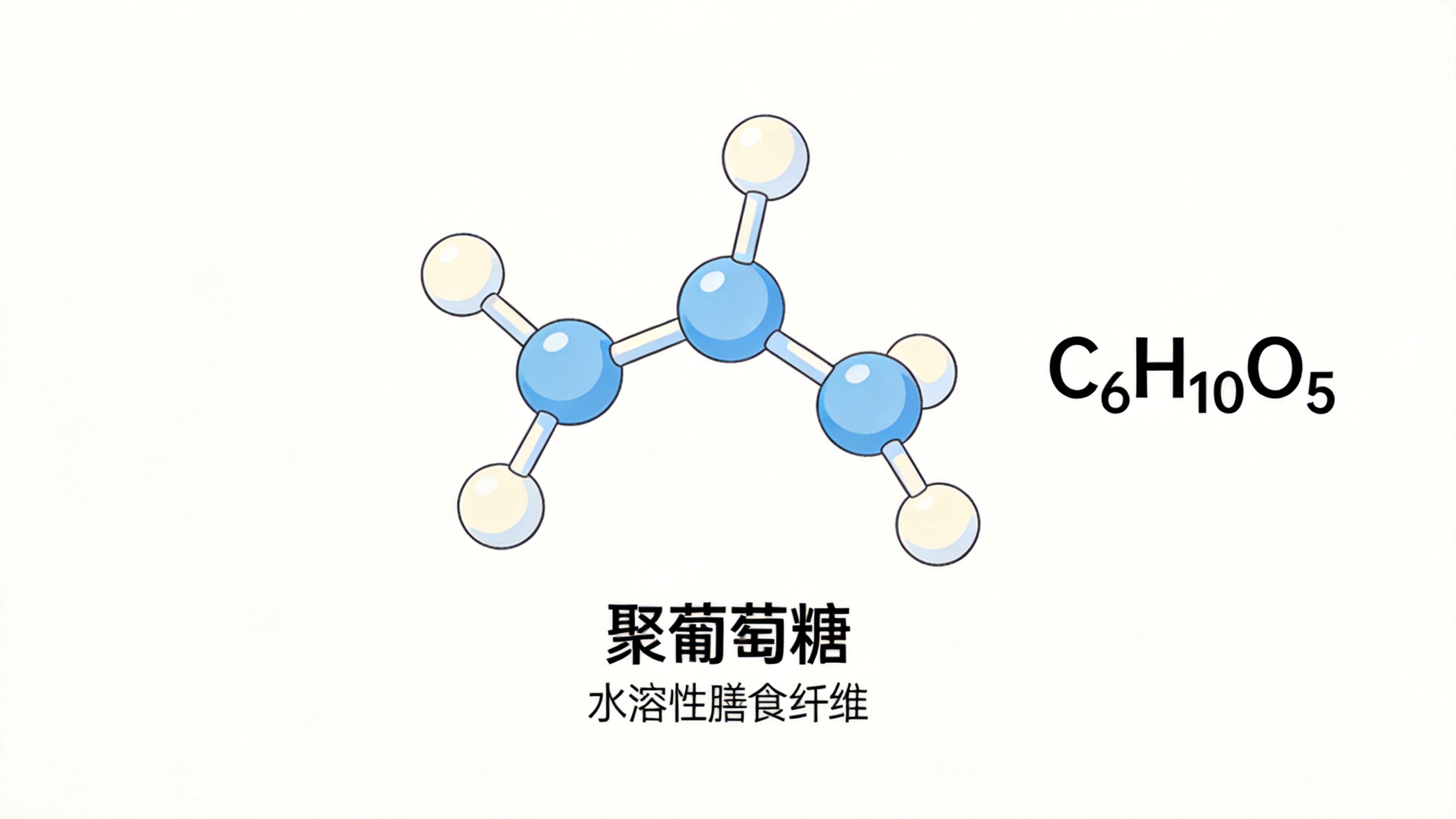


 Copy Link
 Share to WeChat
 Share to Weibo






 Submit Article








 (All Rights Reserved)
 沪公网安备31010402001403号
