


 Buyer
Buyer Supplier

 Copy Link
 X
X Facebook
 Copy Link

Become a creator on the food processing and packaging platform!


The competition in the
catering industry is essentially a contest between efficiency and quality. As the "skeleton" of restaurant operation, catering equipment directly affects the speed of food production, the effect of food preservation and the cost of kitchen management. From the traditional gas stove to today's intelligent Internet of Things equipment, the iteration of catering equipment has not only changed the operation mode of the back kitchen, but also become an important bargaining chip for restaurant differentiation competition. This article will explain the purchase and application of catering equipment in detail from the three dimensions of equipment classification, purchase points and industry trends.
There are many kinds of catering equipment, according to the function can be divided into commercial kitchen core equipment, back hall auxiliary equipment and front hall service equipment three categories, each type of equipment has its own unique design and application scenarios.
Commercial kitchen core equipment
is the "heart" of the restaurant, including cooking equipment (such as fire stove, steamer, oven), refrigeration equipment (refrigerator, freezer, ice machine) and processing equipment (cutting machine, dough machine, meat grinder). Take the hot stove commonly used in Chinese food as an example. The high-quality stove adopts the design of copper fire cover, and the thermal efficiency can reach more than 65%, meeting the demand of "big fire stir-frying". However, the gas steak stove in the western restaurant pays more attention to the uniformity of fire power, reduces local overheating through 3D combustion technology, and ensures the water locking effect when steak is fried.
Back hall auxiliary equipment for
is the key to improve efficiency. For example, the automatic dishwasher adopts the integrated design of high temperature and high pressure washing and drying, which can realize the cleaning amount of 300 + meal per hour, saving 70% of the time compared with manual work. The intelligent disinfection cabinet ensures the sterility rate of tableware> 99% through double sterilization of ultraviolet rays and ozone. In addition, environmentally friendly equipment has also become a trend. For example, the oil-water separator can increase the separation rate of grease in wastewater to more than 90%, which meets the discharge requirements of the health department.
Front office service equipment in the
focuses on customer experience. Self-service equipment such as intelligent ordering machines and self-service checkout terminals can reduce queuing time, while equipment such as unmanned coffee machines and ice cream machines can improve product consistency and reduce human error rate through standardized operation.
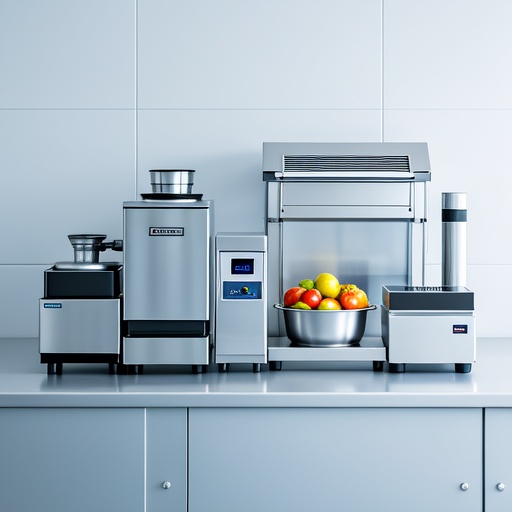
When food and beverage operators to buy equipment, need to combine their own positioning, budget size and technical needs of comprehensive judgment, to avoid blindly follow the trend.
1. Function matching
is the first principle. Chinese food needs a high-power stove and a large-capacity steaming cabinet, while light food restaurants pay more attention to salad dehydrators, low-temperature slow cooking machines and other subdivision equipment. Ice machines in dessert shops should pay attention to daily ice production and ice storage capacity to avoid ice breakage during peak periods. It is recommended to list the "food production list", according to the "required equipment-optional equipment-upgrade equipment" three-level screening, priority to meet the needs of core dishes.
2. Energy consumption and cost control
can not be ignored. Although the initial investment of energy-saving certification equipment is high, long-term use can reduce electricity expenses by 30%-40%; IoT smart devices can monitor energy consumption data in real time, optimize operating parameters through AI algorithms, and further reduce operating expenses.
3. Space adaptation
directly affects the layout of the kitchen. Small restaurants give priority to the use of embedded equipment to reduce the space occupied, and the open kitchen takes into account the cleanliness of the equipment. Before procurement, plan and operate the power line and water and electricity points to avoid problems such as size discrepancy and inconvenient installation.
in 2024 catering equipment is gradually to the "smart and green" direction to upgrade, the Internet of Things, AI and other technologies into, is reconstructing the back kitchen operation logic.
the Internet of Things device linkage has become a new outlet. The intelligent system can monitor the working conditions of the equipment in real time, automatically warn of abnormal conditions, troubleshoot hidden dangers in advance, greatly reduce the probability of kitchen downtime, and effectively reduce the maintenance cost of the equipment.
improve store effectiveness AI enabling decision-making. The intelligent system recommends the combination of dishes according to the inventory of ingredients and consumption preferences, and the ordering equipment intelligently matches the dishes, driving the growth of store revenue.
to accelerate the popularization of green low-carbon equipment. Energy-saving stoves, cold storage power supply equipment effectively reduce energy consumption and exhaust emissions, recyclable environmental protection materials equipment is also gradually popular, in line with the concept of sustainable development of the industry.
The current domestic kitchen equipment industry from simple manufacturing to intelligent service integration stage, intelligent canteen supporting equipment, automated kitchen production line popularity continues to rise. The global catering equipment exhibition continues to exhibit new cooking, refrigeration, baking equipment and digital management solutions, industry technology exchanges accelerated, the future equipment intelligent, intensive, environmental protection attributes will become more prominent.
Become a creator on the food processing and packaging platform!
 Submit Now










 (All Rights Reserved)
 沪公网安备31010402001403号
