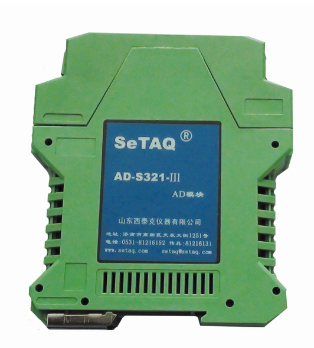
                                   Features and Specifications:

★  Measuring range: ±15mV

★  A/D Resolution:1000000

★  Temperature coefficient:≤5ppm/℃(typical)

★  HardwareInterface: RS-485interface, half-duplex.

★  Software Protocol: Rectangle: Freeport/ Modbus RTU protocol (opt.)

                                     Round: Freeport protocol

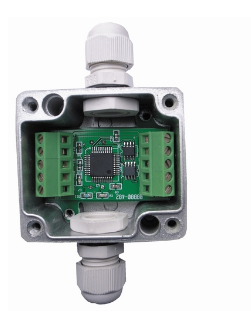
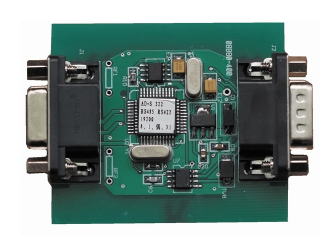
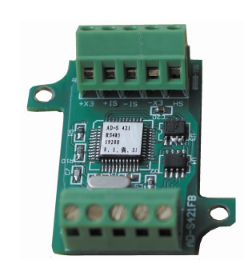
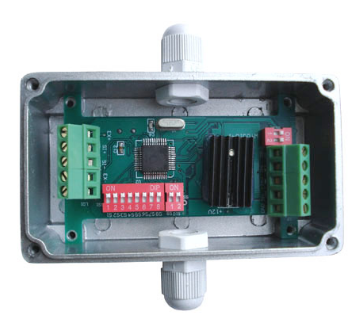
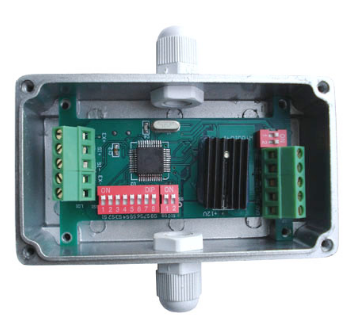
★  Dimensions(mm):Rectangle:55×49×18

                                        Round :Φ32×8

★  A/D conversion,digital calibration, tare, zero setting/tracking, switch-on zero setting,anti-dithering;

★  All the parameters can be set through serialinterface;

★  Module addresses are availablefrom 0 to 31. Modules can work through bus communication;

★  Baud rate,parity bit and data output format can be set. 1200~38400bps;

★  Digital filtering: standard filtering or LPF;

★  Samplingspeed: 3.125~400Hz;

★  Storage ofthe parameters with protection against power failure;

★  OperatingVoltage: 9V DC(6.5V~12V); Operating Current:≤40mA;

★  Complete protection: wrong wiring protection, overvoltage protection, transient voltage suppression;

★  Operating temperature range: -40℃~+70℃; Storage temperature range: -60℃~+90℃

Wiring Diagram of SeTAQ AD-S321:

If the RS485 signal wires are too long, or there are several AD-Smodules are connected on the same bus, these modules may not be found due tolack of driving capacity. Then please connect a module’s RA with +5V through a 1kΩ pull-up resistor R1, and connect the module’s RB with GND through a 1kΩ pull-down resister R2. Note that if there are severalAD-S modules are connected on the same bus, you can only add a pull-up resistor R1 and a pull-down resistor R2 to the AD-S module which is the farthest from PCconverter or PLC. If this does not solve the problem, you can also add a pull-up resistor R3 and a pull-down resistor R4 to the other end of RS485 wires.





















 沪公网安备31010402001403号

