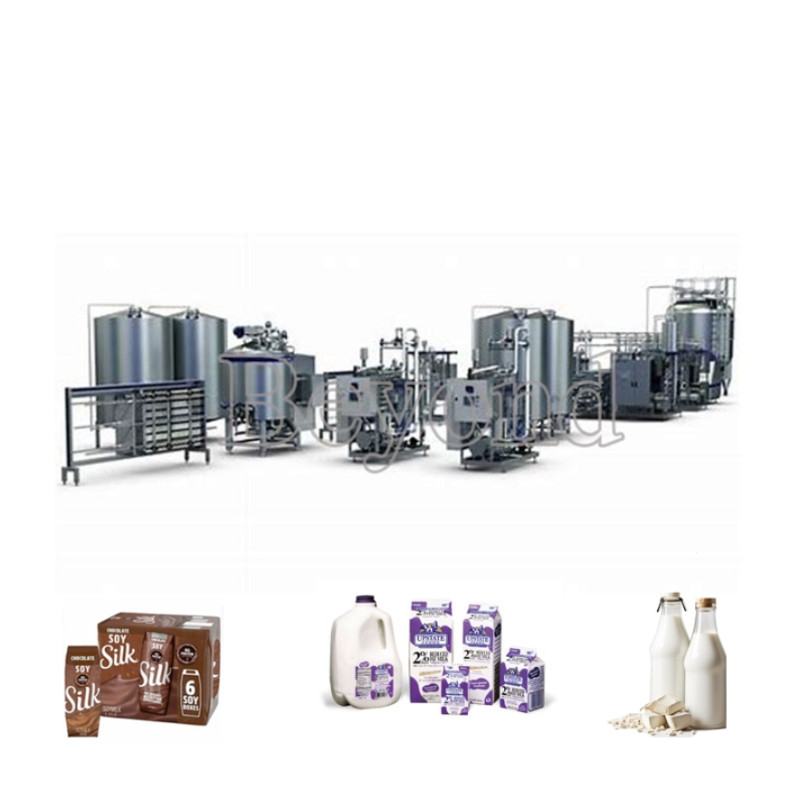
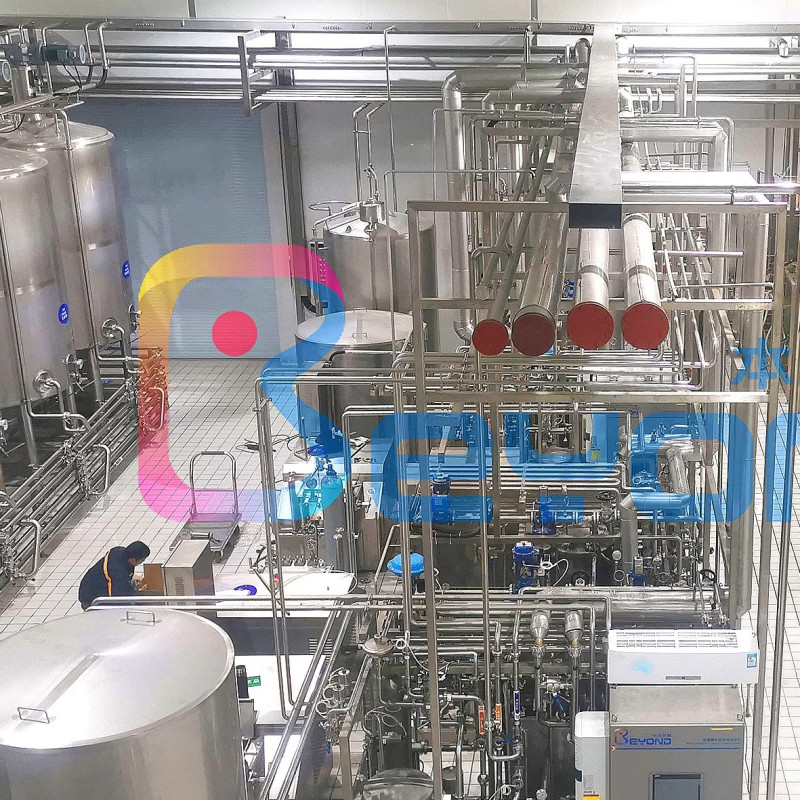
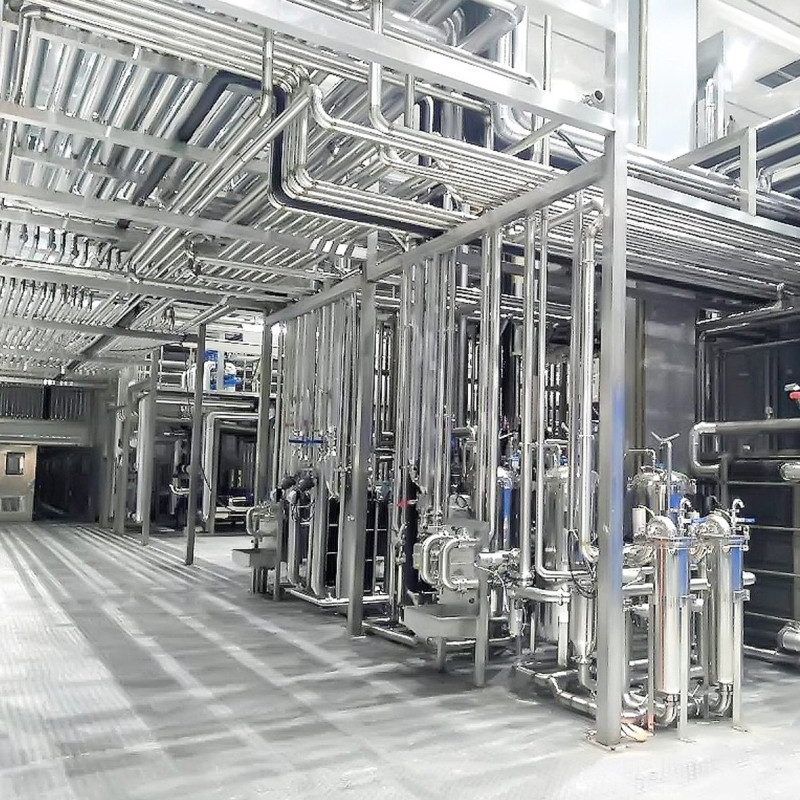
A soy milk processing line is a series of equipment and machinery used to produce soy milk from soybeans. The process typically involves several steps, including cleaning and soaking the soybeans, grinding and separating the pulp from the milk, heating and pasteurizing the milk, and packaging the final product.
Here is a breakdown of the main components of a soy milk processing line:
-
Soybean Cleaning: This step involves removing any impurities, such as stones, dirt, or debris, from the soybeans. This can be done using various cleaning equipment, such as a destoner, magnetic separator, and air cleaning machine.
-
Soaking and Grinding: The cleaned soybeans are soaked in water to soften them, making it easier to extract the milk. After soaking, the beans are ground into a slurry using a grinder or mill.
-
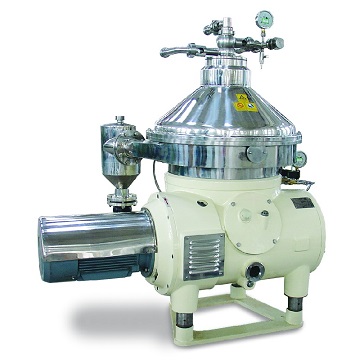
Separation: The ground soybean slurry is then passed through a separation device, such as a centrifuge or filter press, to separate the soy milk from the soybean pulp or solids. The separated milk is collected while the pulp is discarded or used for other purposes.
-
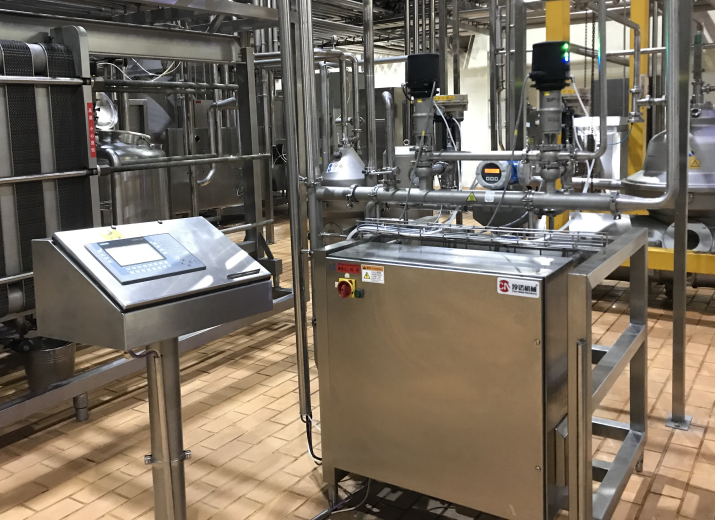
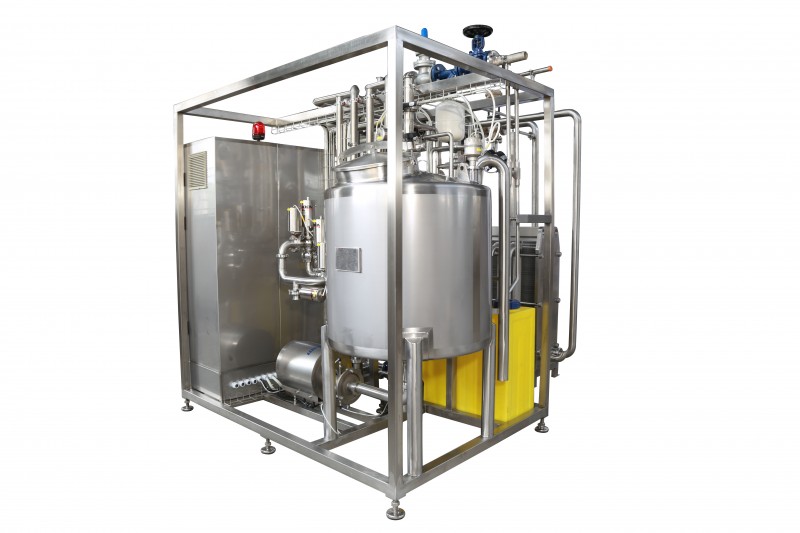
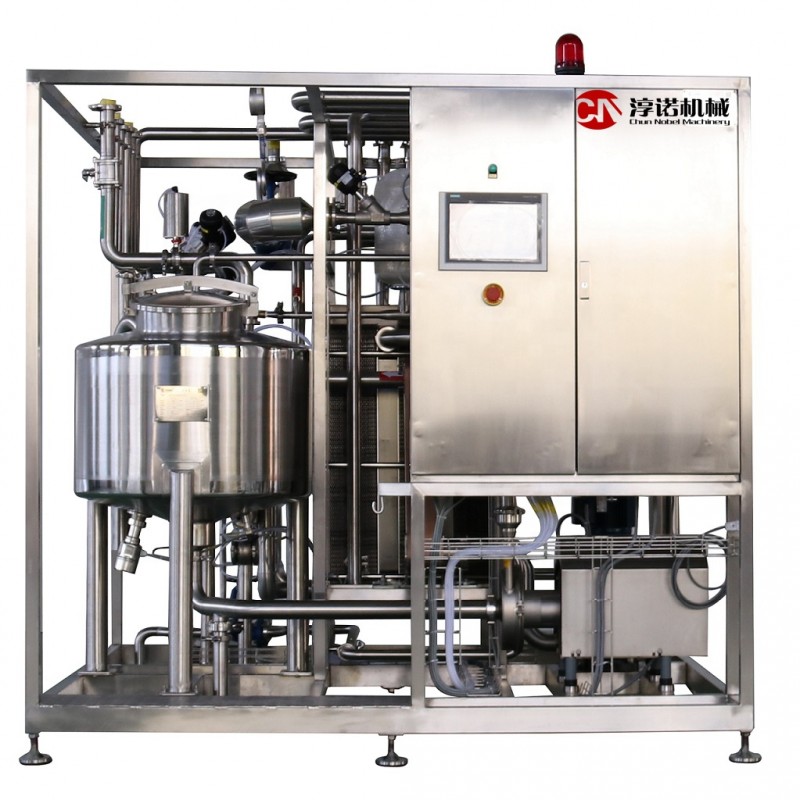
Heating and Pasteurization: The extracted soy milk is heated to a specific temperature to kill any harmful bacteria and ensure the milk is safe for consumption. This can be done using a heat exchanger or a pasteurization unit.
-
Flavoring and Fortification: Some manufacturers may choose to add flavors, sweeteners, or fortifying ingredients, such as calcium or vitamins, to enhance the taste and nutritional content of the soy milk. This step can involve mixing or blending equipment.
-
Homogenization: Homogenization is a process that breaks down fat droplets in the soy milk, creating a smoother and more consistent texture. This is typically achieved using a homogenizer.
-
Filtration and Sterilization: The soy milk may undergo further filtration to remove any remaining impurities or particles. Additionally, if the product is intended for long shelf life, it may be sterilized using methods such as ultra-high temperature (UHT) processing.
-
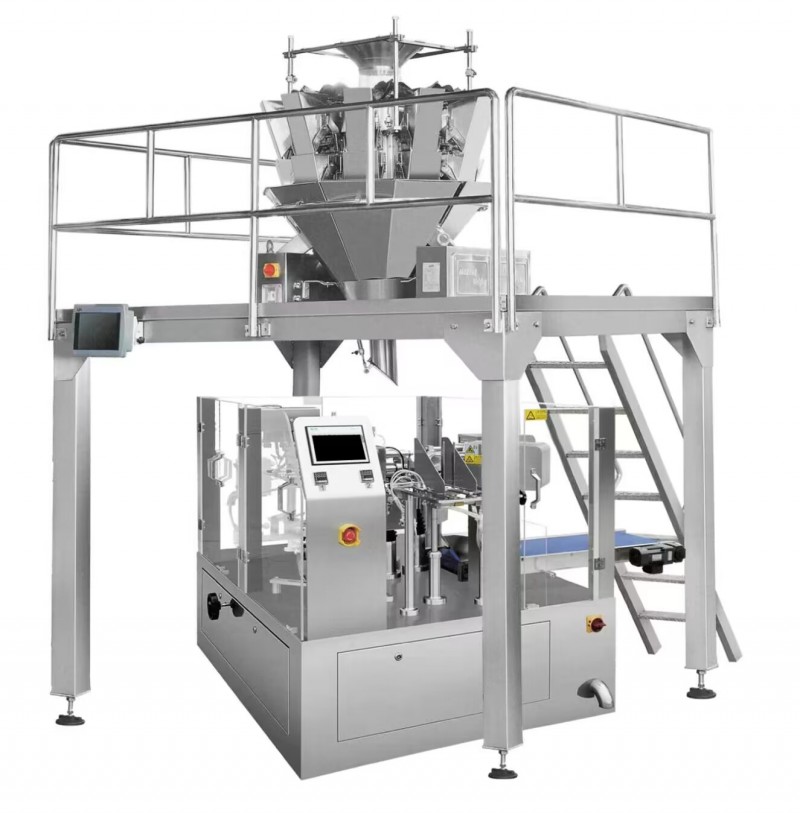
Packaging: The final step in the processing line involves packaging the soy milk into containers, such as cartons, bottles, or pouches. This can be done using filling and sealing machines.
Overall, a soy milk processing line combines various equipment and processes to efficiently produce high-quality soy milk. The specific design and configuration of the processing line may vary depending on the production capacity, desired product specifications, and automation level required by the manufacturer.
https://www.shbenyou.com/soy-milk-processing-line457161-16325498563498571.html




















 沪公网安备31010402001403号

