


All Categories
Purchase
Mobile
Contact Us
Top
Chinese
All Categories
Products
Suppliers
Purchase Request
Exhibitions/Events
News
Videos
Buyer
Supplier
Home News & Wiki Wiki List
Wiki Details
Share to

Kaolin

高岭土

English Alias:

Chinese Alias:

Category:

Kaolin is a natural hydrous aluminosilicate, chemical formula Al₂ Si₂ O (OH) H, CAS 1332-58-7,INS E559. In the field of food additives, it is used as a clarifying agent and filter aid, and is used in the processing and fermentation of wine, fruit wine, yellow wine and mixed wine. GB 2760-2024 is listed as processing aids, and GB 31628-2014 specifies quality specifications. The EU deleted E559 in 2014 due to aluminum risk, and the US FDA determined GRAS,JECFA did not stipulate ADI. White to yello
高岭土
高岭土
Definition
Industry Overview
Technical Standards
Application Areas
Security Control
Development Trends
Policies & Regulations
References
Definition
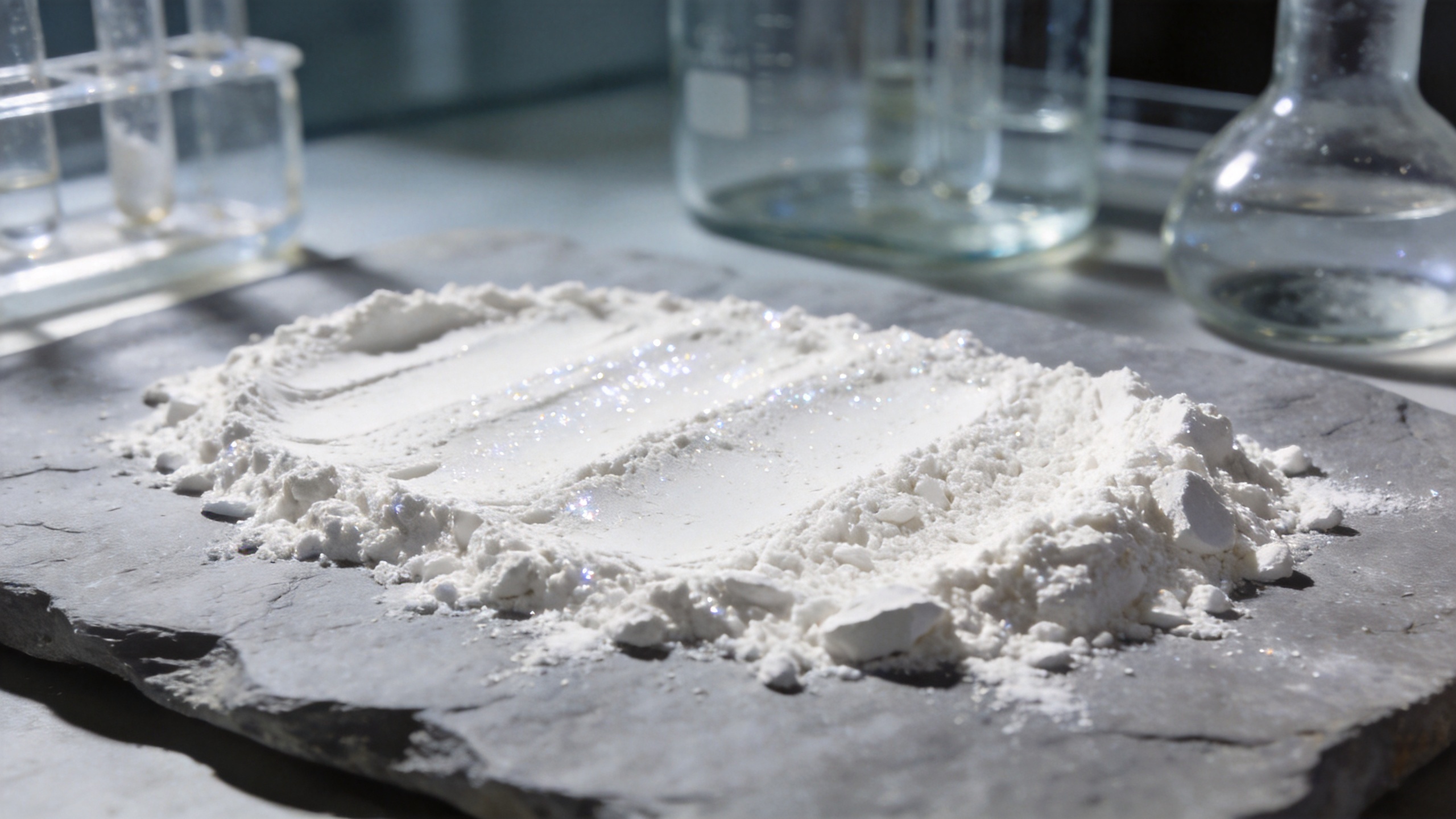
Kaolin (Kaolin) is a kind of natural clay mineral with hydrous aluminum silicate as the main component, which belongs to the layered silicate mineral system and is an important functional additive in the food industry. From the core concept, kaolin is the general name of kaolinite group minerals, and its chemical essence is hydrated aluminum silicate (Al₂ Si O (OH)),CAS number 1332-58-7,EINECS number 310-194-1,INS number E559. Its crystal structure consists of a layer of silicon-oxygen tetrahedron and a layer of aluminum-oxygen octahedron connected by sharing oxygen atoms, forming a typical 1:1-type layered structure, which is connected by hydrogen bonds between layers and does not have expansibility. In terms of terminology dismantling, kaolin is named after its earliest discovery in Gaoling Village, Jingdezhen, Jiangxi Province, China. The word Gaoling not only carries the meaning of geographical identification, but also represents the historical heritage of Chinese ceramic culture. Internationally, it is also known as China clay (Chinese clay) or Kaolinite (kaolinite mineral name); In the Chinese context, its alias includes kaolin, porcelain clay, aluminum silicate, it reflects its traditional use and appearance characteristics in the ceramic industry. In essence, kaolin belongs to non-metallic minerals and is a typical dioctahedral 1:1 layered silicate mineral. It has the characteristics of stable crystal structure, strong chemical inertness, high specific surface area (usually 10-30 m/g), good adsorption performance, high melting point (about 1785 ℃), relative density of 2.54-2.60, pH value of 6-7(50g/L suspension), etc. The pure product is white powder, gray or pale yellow when it contains impurities, with a greasy feeling and earthy taste, insoluble in water, ethanol, dilute acid and lye, and has plasticity after kneading with water. In synonymous and synonymous expressions, the English names Kaolin, Kaolinite, China clay and Aluminium silicate all refer to the same substance or its related forms. The difference between light kaolin (Light Kaolin) and heavy kaolin (Heavy Kaolin) in the commodity name lies in the different production process and bulk density. The light type contains dispersant, while the heavy type does not. In terms of applicable boundary, food-grade kaolin must undergo strict purification treatment-take granite, gneiss and other crystalline rocks to form slurry, wash with water to remove sand, treat with dilute inorganic acid and wash with water repeatedly, and then dehydrate above 330 ℃-to remove harmful impurities such as heavy metals and asbestos fibers, and its application scope is limited to processing aids (clarifiers and filter aids), there shall be no residue in the final product or the amount of residue shall meet the relevant standards. In terms of historical evolution, kaolin has been used as a ceramic raw material in China for more than 1,000 years. Jingdezhen has been famous for kaolin porcelain since the Song Dynasty. The application of modern food industry began in the middle of the 20th century and was initially used for clarification and decolorization of wine and starch syrup. With the improvement of refining technology and quality standards, it is gradually standardized. GB 2760-90 listed it as a processing aid for the food industry for the first time, GB 31628-2014. From different perspectives, mineralogy focuses on its crystal structure (X-ray diffraction characteristic peaks d = 0.717 nm and 0.358 nm) and physical and chemical properties. The food science perspective emphasizes its adsorption and sedimentation mechanism-through the adsorption of positively charged proteins and colloidal particles by negative surface charges, flocs are formed to accelerate sedimentation; Toxicology perspective focuses on its aluminum exposure risk-human body does not absorb kaolin itself, but long-term accumulation of aluminum may pose health risks; A pharmaceutical perspective focuses on its pharmacological activity as an antidiarrheal and gastrointestinal protective agent. In related concepts, bentonite (Bentonite,E558) is also used as a clarifying agent, but there are obvious differences in mineral composition and adsorption characteristics between them-kaolin is 1:1 type layered structure, non-swelling, specific surface area 10-30 m/g, bentonite is 2:1 type swelling structure, water swelling, specific surface area up to 600-800 m/g, the latter has a larger adsorption capacity but poor selectivity; diatomite mainly relies on porous physical interception, and its chemical adsorption is weak. After acid activation treatment, the specific surface area of activated clay is ≥ 130 m/g, and the decolorization force is stronger but free acid residue may be introduced. Understanding these differences is helpful for the rational selection and use of mineral processing aids in food processing.
Industry Overview
Kaolin food additives industry belongs to the food processing additives sub-field, its industrial chain structure covers upstream mineral mining and purification, midstream fine processing and standard preparation, downstream application scenarios and end products three links. The upstream uses kaolin ore as raw material. The global open reserves of kaolin ore are about 23.8 billion tons. The main producing areas include China (with reserves of about 6.7 billion tons, ranking third in the world), the United States, Brazil, the United Kingdom, Malaysia and other places. The distribution of high-quality resources is uneven-Brazil, the United States, the United Kingdom and China hold more than 80% of the world's high-grade reserves. Midstream processing requires crushing, washing, dilute acid treatment, drying, sieving and other processes to produce food-grade products conforming to GB 31628-2014. The key control points include heavy metal limit (lead ≤ 10 mg/kg, inorganic arsenic ≤ 3 mg/kg), particle size distribution (usually 200-400 mesh, I .e. 38-74 μm is the ideal range), whiteness and ignition loss (≤ 15%). High-end calcined kaolin still needs to be imported, the average import price is about US $580/ton, significantly higher than the domestic average price of 320 yuan/ton. Downstream focus on the clarification and filtration process of wine (wine, fruit wine, yellow wine, prepared wine), can also be used for oil decolorization, starch syrup purification and other scenarios. In terms of market size, the overall size of the global kaolin market is about US $4.21-0.4715 billion in 2024 (Fortune Business Insights and Market Research Future data), and is expected to reach US $6.28-0.7532 billion in 2032-2035, with a compound annual growth rate of about 4.35-5.2 in 2025-2035. Among them, the Asia-Pacific region is the largest consumption region (volume accounts for about 46.8 percent and value accounts for about 28 percent). China will produce about 15.2 million tons in 2025, accounting for 32.7 percent of the world, the consumption scale is about 9.82 billion US dollars. Food-grade kaolin accounts for a relatively small proportion of total kaolin demand (38.2 per cent in the ceramic industry and 29.5 per cent in paper coatings), but demand for wine processing and food refining is growing steadily. From the application field decomposition, the ceramic industry is still the largest consumer market, followed by paper coatings, new energy battery separator coatings, functional fillers and environmental protection materials and other emerging areas to an average annual growth rate of 6.8 percent, the proportion of demand is expected to increase from 7.3 percent to 12.1 percent in 2030. The main participants are showing a trend of centralization. The world's top 10 producers control about 54% of their production capacity. International enterprises include a French mining group, an American kaolin enterprise, a Belgian mining group, a German chemical group, an Indian mining enterprise and an American kaolin enterprise. Chinese local enterprises account for 4 seats, accounting for about 19% of the world's total production capacity. The development stage of the industry is in a period of transition from extensive to intensive. The number of kaolin mining licenses in China will decrease by 22% in 2025 compared with 2020. The environmental protection policy will promote the integration of production capacity. Technological innovation will focus on the development of ultra-fine powder, surface modification and functional composite materials. In 2025, the number of kaolin-related patent applications worldwide will reach 2340, up 9.1 year on year, of which China will account for 42.6. In terms of regional pattern, the European and North American markets are mature but the growth rate is slowing down (average annual growth rate is 1.9-2.1%), the Asia-Pacific region is the fastest growth rate (5.4-6.2%), and the demand growth rate of Latin America, the Middle East and Africa due to infrastructure and manufacturing expansion is 5.4-6.2%. The global kaolin trade volume is about 11.2 million tons, and China's net import is about 400000 tons, mainly from the United States, Brazil and Europe. Key nodes in the development process include: GB 2760-90 is listed as a processing aid for the first time; GB 31628-2014 Releases National Food Safety Standards; The European Union banned E559 in 2014; The United States continued GRAS accreditation; JECFA has not set ADI limits for many evaluations; In 2015, the EU revised REACH regulation to raise the limit of heavy metals in kaolin to below 0.5 ppm. Industry pain points include the depletion and uneven distribution of high-grade resources, high purification costs, high pressure on aluminum exposure risk control, residual detection methods need to be improved, and differences in international regulations lead to higher compliance costs. Drivers include continued growth in the wine and beverage industry (global wine production is stable at more than 26 billion liters/year), increased demand for food processing refinement, expansion of emerging applications, market differentiation and alternative product innovation due to global regulatory differences.
Technical Standards
The technical standard system of kaolin food additives covers international standards, national standards, industry standards and certification systems. In terms of international standards, the "Compendium of Food Additive Specifications" issued by the FAO/WHO Joint Expert Committee on Food Additives (JECFA) contains Kaolin(Aluminium silicate) specifications, which stipulate that water soluble matter ≤ 0.3%, acid soluble matter ≤ 2%, lead ≤ 5 mg/kg, and require asbestos to be negative. EFSA assessed the risk of aluminum exposure in 2013 and supported the EU to remove E559 from the allowed list in 2014. China's national standard system mainly includes: GB 31628-2014 National Food Safety Standard Food Additive Kaolin, which stipulates that the sensory requirements are white to yellowish white or gray powder. The physical and chemical indexes include carbonate passing test, iron passing test, sulfide passing test, acid soluble matter ≤ 2.0, ignition loss ≤ 15.0, inorganic arsenic ≤ 3 mg/kg, lead ≤ 10 mg/kg, attached are appendices of identification tests and inspection methods. GB 2760-2024 "National Food Safety Standard for the Use of Food Additives" specifies that kaolin functions as clarifier and filter aid. The application scope covers the processing technology and fermentation technology of wine, fruit wine, yellow wine and mixed wine. The residual amount shall meet the standards. GB 5009 series of method standards stipulate the detection methods of heavy metals such as arsenic and lead. In terms of industry standards, the 8th edition of FCC (food chemicals code) has detailed regulations on the food grade specifications of kaolin, including acid soluble substance ≤ 2.0, arsenic ≤ 3 mg/kg, lead ≤ 10 mg/kg, carbonate test negative, sulfide test negative, ignition loss ≤ 15%, and iron test negative. The European Pharmacopoeia (Ph. Eur.) also contains light kaolin (Light Kaolin), mainly used in the field of pharmaceutical excipients. In terms of certification system, food grade kaolin enterprises need to pass ISO 9001, ISO 22000, FSSC 22000, HACCP and other system certification, and export enterprises need to meet FDA registration, EU REACH compliance, halal (Halal) and kosher (Kosher) certification. The evolution of standards shows that China's standards have been gradually improved from GB 2760-90 to GB 2760-2024, and the quality specifications have been compiled independently (GB 31628-2014); At the international level, JECFA set the PTWI of aluminum at 2 mg/kg bw in 2011 and further revised the specifications in 2013. The EU has implemented the E559 ban through regulatory updates. Standard comparison shows that China and FCC specifications are relatively close, are strictly restricted heavy metals. At the level of standard implementation, enterprises need to establish the whole process control of raw material acceptance, process monitoring, factory inspection and sample traceability, and regularly accept sampling inspection by market supervision departments. Future standard trends include: further reducing the limits of heavy metals and microorganisms, increasing functional indicators (such as specific surface area, zeta potential), strengthening residue detection methods, and promoting the coordination and mutual recognition of international standards.
Application Areas
More Reading
View More
Procurement Opportunity
View More
Feeder System

Grö***Bladet AB Company Profile

2026-05-12

Validity Remaining 23 Day
Submit Quote
Domino Inkjet Printer

Grö***Bladet AB Company Profile

2026-05-12

Validity Remaining 23 Day
Submit Quote
Vertical Form Fill Seal (VFFS)

Grö***Bladet AB Company Profile

2026-05-12

Validity Remaining 23 Day
Submit Quote
Working Platform

Grö***Bladet AB Company Profile

2026-05-12

Validity Remaining 23 Day
Submit Quote
Multihead Weigher

Grö***Bladet AB Company Profile

2026-05-12

Validity Remaining 23 Day
Submit Quote
Z-Type Bucket Elevator

Grö***Bladet AB Company Profile

2026-05-12

Validity Remaining 23 Day
Submit Quote
10 Heads Weigher packing machine

ibr***m@gronabladet.se

2026-05-12

Validity Remaining 23 Day
Submit Quote
Spout pouch

mim***lab manufacturing company limited

2026-05-12

Validity Remaining 23 Day
Submit Quote
new vertical sealing jaws

Nat*** One dairy PTY LTD

2026-05-12

Validity Remaining 23 Day
Submit Quote
inquiry of milk powder

0

2026-01-21

Validity Expired
Submit Quote
Feeder System

Gröna Bladet AB Company Profile

2026-05-12

Validity Remaining 23 Day
Submit Quote
Domino Inkjet Printer

Gröna Bladet AB Company Profile

2026-05-12

Validity Remaining 23 Day
Submit Quote
Vertical Form Fill Seal (VFFS)

Gröna Bladet AB Company Profile

2026-05-12

Validity Remaining 23 Day
Submit Quote
Working Platform

Gröna Bladet AB Company Profile

2026-05-12

Validity Remaining 23 Day
Submit Quote
Multihead Weigher

Gröna Bladet AB Company Profile

2026-05-12

Validity Remaining 23 Day
Submit Quote
Z-Type Bucket Elevator

Gröna Bladet AB Company Profile

2026-05-12

Validity Remaining 23 Day
Submit Quote
10 Heads Weigher packing machine

ibrahim@gronabladet.se

2026-05-12

Validity Remaining 23 Day
Submit Quote
Spout pouch

mimcoslab manufacturing company limited

2026-05-12

Validity Remaining 23 Day
Submit Quote
new vertical sealing jaws

Nature One dairy PTY LTD

2026-05-12

Validity Remaining 23 Day
Submit Quote
inquiry of milk powder

0

2026-01-21

Validity Expired
Submit Quote
Wiki Contribution

Become a creator on our food processing and packaging platform~

Submit Article